I did not choose to become a student of grief. It enrolled me without asking, and I had no choice but to learn.
Sometime during Muharram this year, I noticed that my usual defenses and coping mechanisms, the ones that had carried me through every hard year before this one, had quietly stopped working. What learning about grief has since taught me is not what I expected. I thought it would teach me how to survive. Instead, it taught me two harder, but perhaps more useful things: the first was that grief needs to be felt, not intellectualized and the second was that some of this work can be done alone, and but healing can never truly happen in solitude.
For most of my life, I was, by my own proud estimation, the queen of emotional regulation. I never crashed out. I had never done anything you could call unhinged in the face of grief or loss. I regulated. Went on a run, grabbed a book, drafted a journal entry or an elaborate private theory about why I felt the way I felt. Understanding, I believed, was a form of processing. Life could throw the biggest bricks at me, and I would still build something out of the rubble. Then, one day, someone threw a rock. And I fell apart in the specific humbling way that only happens to people who were sure they were unbreakable.
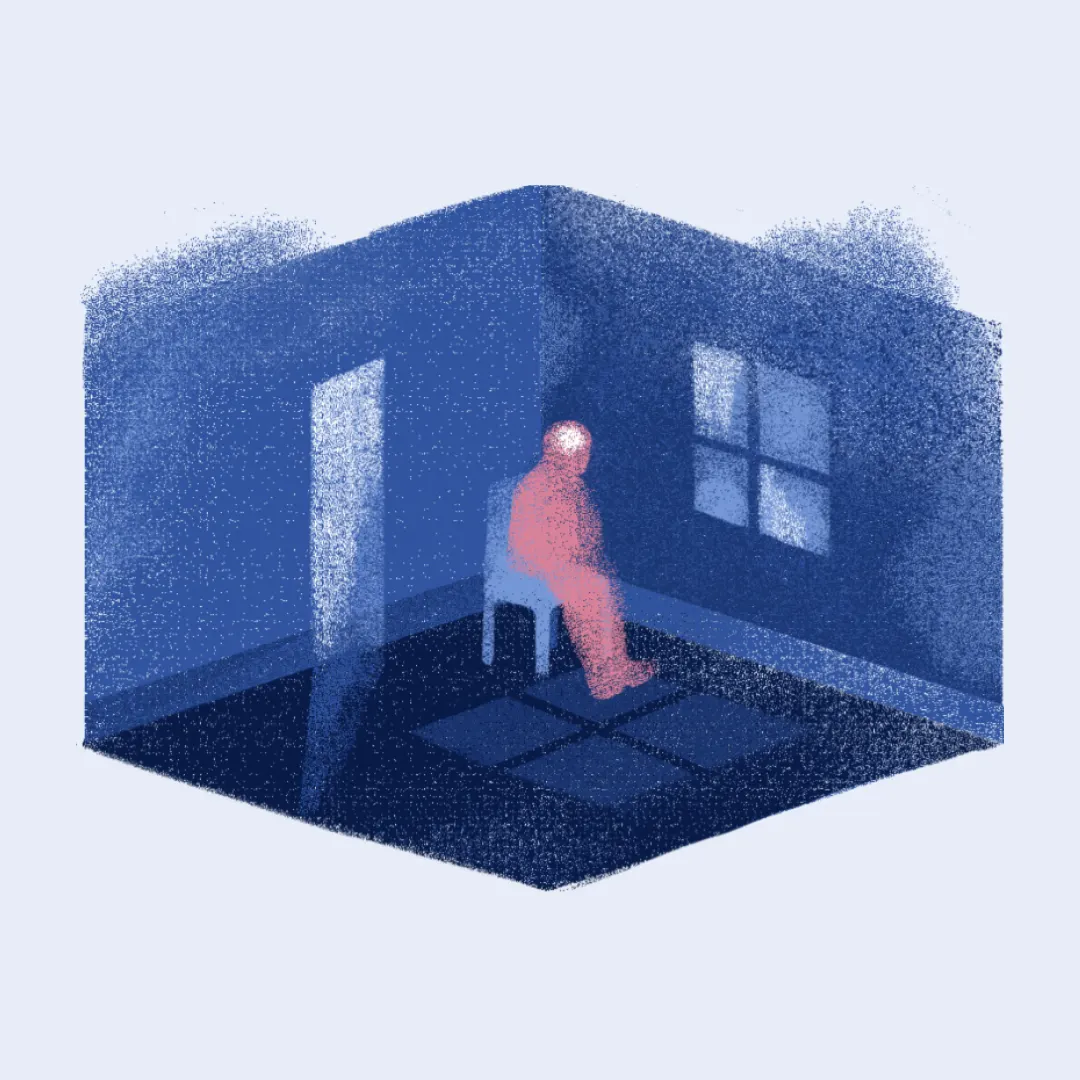
My distractions stopped working first. Then my body did what my mind refused to: it kept score. I lost my appetite, except for the specific, protein-deficient comfort of masala fries. I slept too much and rested too little. I stopped listening to music, which for me is as close to a diagnosis as a doctor's note. I woke up one morning and wondered, with genuine cosmic confusion, why the world kept spinning when I had so clearly fallen off it.
It took a friend less than five minutes on the phone to name what I'd been avoiding: I was depressed. I was supposed to be grieving something and was running away from it instead. “You need a break,” she said. “Your body is forcing you to rest.” What she didn't say, because she didn't need to, was that a break meant confronting how I felt and that was the part I had spent my entire adult life organizing myself to avoid.
Real solitude, the kind Iqbal and Jung are both describing, doesn't manage a feeling from a safe distance. It sits in the room with it. Analysis, I've realized, is its own form of avoidance.
This is where I went looking for older, wiser company. Allama Iqbal spent much of his poetic life exploring khudi (selfhood) and the discovery folded into that philosophy is that the self isn't protected from suffering so much as built by it. In a poem called Falsafa-e-Gham (Bang-e-Dara), he writes: “The chapter of sorrow, too, belongs to the book of life.”
Ashk Bhi Rakhta Hai Daaman Main Sihab-e-Zindagi
Mauj-e-Gham Pe Raqs Karta Hai Habab-e-Zindagi
Hai Alam Ka Surah Bhi Juzw-e-Kitaab-e-Zindagi
A drop of tear carries life in its embrace. Or, as Gulzar put it more simply in the song Dil Se: “Dil hai toh phir dard hoga, dard hai toh dil bhi hoga.”
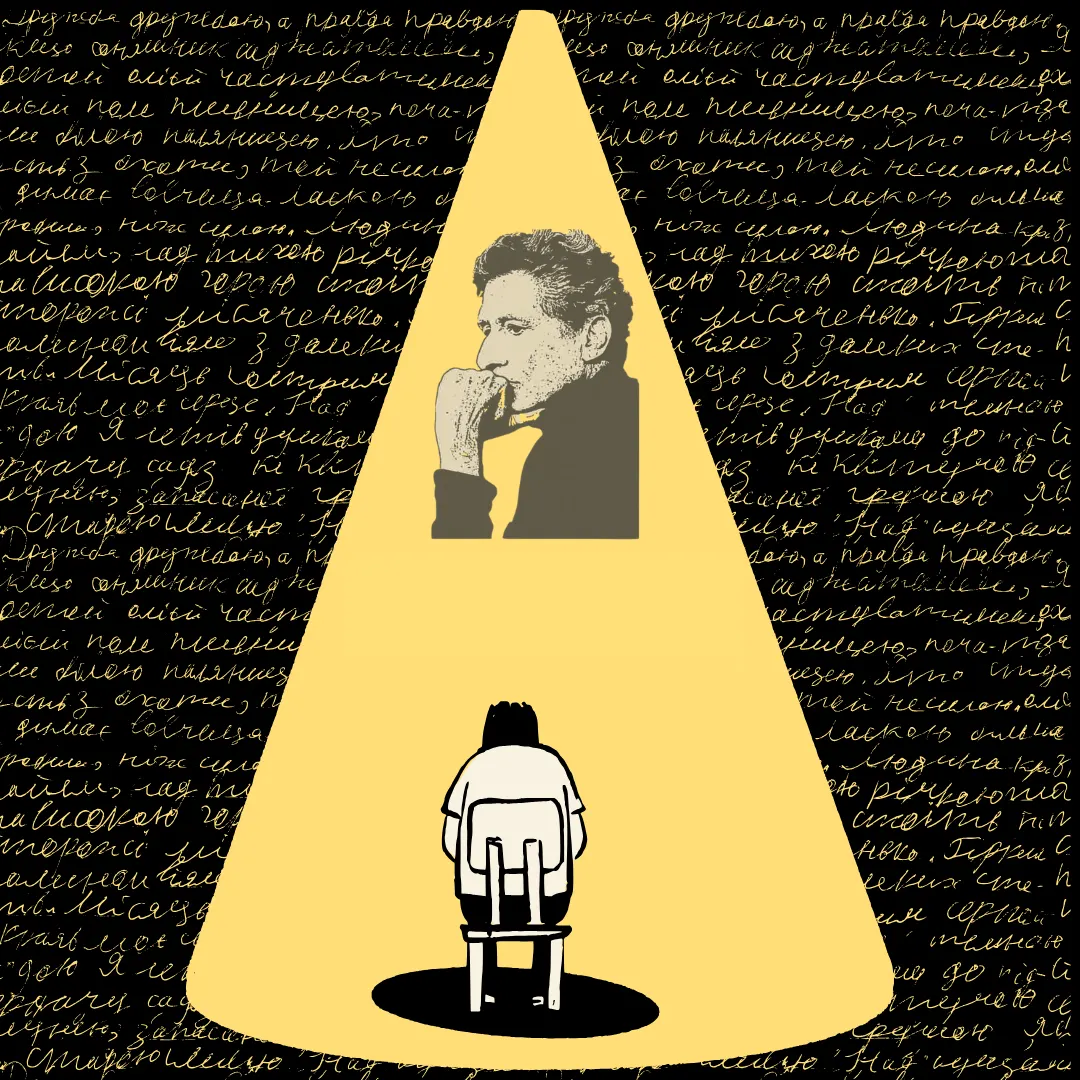
Carl Jung, writing in a different language and a very different century, arrives at something similar from the opposite direction. “There is no coming to consciousness without pain,” he wrote. His entire psychology rests on the idea that the self grows not around suffering but through it. Elsewhere, in The Development of Personality, he puts it more gently: “Embrace your grief. For there, your soul will grow.” Between the two of them, I found language for what I actually needed to do, which was not to manage my grief but to let it in.
This is the first thing grief taught me: that the regulation I had always been so good at wasn't effective at all. It was a very elaborate way of not being alone with the feeling. Real solitude, the kind Iqbal and Jung are both describing, doesn't manage a feeling from a safe distance. It sits in the room with it. Analysis, I've realized, is its own form of avoidance. True reflection asks for a pause, and an honest conversation with yourself.
When I finally stopped managing and started feeling, grief did not arrive as sadness. It arrived as a total identity crisis; a moment where certainty dissolves and you're left in the limbo between who you were and who you now have to become. It was, of all things, a Taylor Swift song I had heard a hundred times before that finally broke something loose. Rue the day you actually relate to a Swift song. It erupted, and I let it engulf me. Afterward, there was a clarity I hadn't expected. Iqbal has a line for this too: “Didah-e-beena main dagh-e-gham chiraag-e-seena hai” — in a seeing eye, the scar of grief becomes a lamp inside the chest. Sitting with grief properly doesn't just hurt. It illuminates.
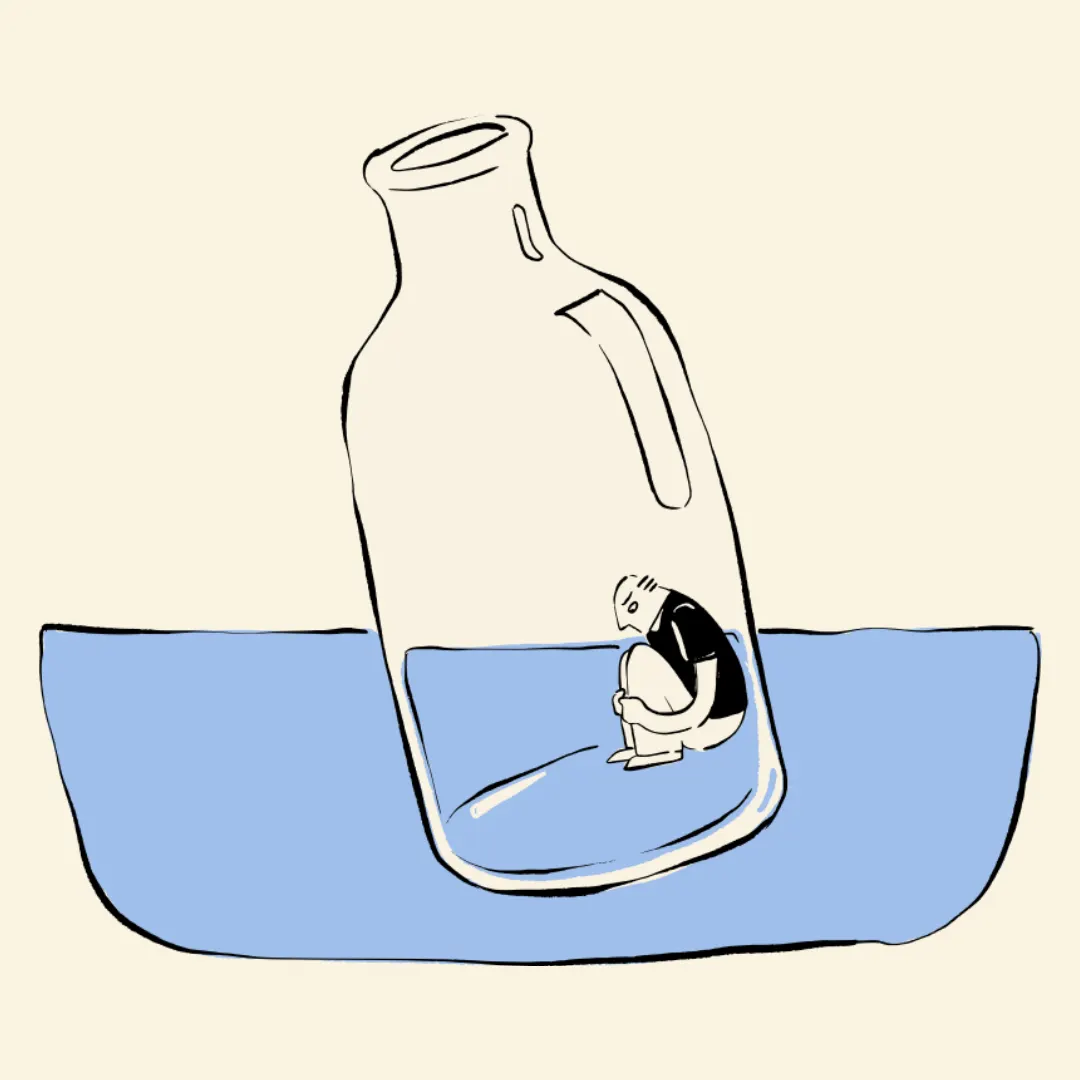
But solitude with grief is a narrow path, and it's easy to wander off it in either direction. Distraction is one ditch, and I know that one intimately. Romance is the other. At one point I noticed I had developed a strange relationship with sad music, seeking it out the way you'd seek out a bruise to press or pick at a pimple knowing it gets worse when you do. Catharsis is one thing; wallowing in your own misery is another, and both Jung and Iqbal, for all their insistence on sitting with pain, were clear that misery is not a home to move into. Left unchecked, grief can turn into a cage instead of a threshold. A bloodless invasion where you eventually make friends with the soldiers occupying you, reluctant to see them go. The goal was never to let it live there, it was to let the grief pass through and change what it found.
Here is where I think both of my philosophers, brilliant as they were, ran out of road. I see this as a limitation of their gender perhaps. Iqbal and Jung both write about grief as something met inside the privacy of one’s own consciousness. The self alone, in the dark, doing its necessary work. They're not wrong that some of it has to happen there. But mine was never that solitary, and I don't think, in the end, it was supposed to be.
Every night, I watched her finally break, the grief of Karbala giving way to her own. At the risk of sounding like a tone-deaf Sunni, I was mesmerized by the structure of it: a nightly ritual that made room for her to fall apart on schedule, in company, instead of alone at three in the morning.
A few years ago, a friend lost her mother, and her grief became a part of mine. That was my first real encounter with majalis. I'd seen them on television, but never sat inside one. During the day, my friend handled logistics and relatives without a single tear; she remains the most resilient person I know. Then, every night, a small group gathered at her place to hold a majlis. I used to picture these as grand affairs, full of people. I learned that even four is enough. Every night, I watched her finally break, the grief of Karbala giving way to her own.
At the risk of sounding like a tone-deaf Sunni, I was mesmerized by the structure of it: a nightly ritual that made room for her to fall apart on schedule, in company, instead of alone at three in the morning. We don't have anything like that in Sunni households. What we have, if we're lucky, is each other, arranged less formally, but no less faithfully. bell hooks wrote that healing is rarely, if ever, accomplished in isolation, that it is instead “an act of communion.” She writes elsewhere that to love fully is to stay open to grief, to let sorrow touch you rather than let yourself harden against it. I didn't understand either sentence until I watched my friend cry in a room of four people who had shown up on purpose, every night, for exactly that reason.
My own friends did for me what that majlis did for her. One diagnosed my grief before I had the language for it. Others simply sat with me while I came undone, without trying to fix it or rush it along. Male philosophers, for all their insight, tend to imagine grief as a private negotiation between a person and their own psyche. Mine was never private. My friends dragged me toward feeling, even when I resisted it. They also didn't let me drown in it.
So here is what grief has taught me, for whatever it's worth to anyone reading this mid-way through their own version of it: the first part, the facing of it, you probably have to do alone. No one can sit inside your particular sorrow for you. But the carrying of it, the actual living-with, was never meant to be a solo act. Iqbal built a self that could survive its own sorrow. Jung built a soul that could grow from it. bell hooks, writing after both of them, added the piece I needed most: that we heal out loud, together, or not fully at all.
A friend once told me it's a privilege to feel things deeply, that it's a part of yourself worth protecting, not killing. I think of that often now, alongside a line from the film Paterson, about how reading poetry in translation is like standing in the rain wearing a raincoat. For a long time, I wore the coat, because I thought the point was to stay dry. What I understand now is that the coat doesn’t matter as long as you’re not getting soaked alone. If you're in it right now, soaked through and certain no one else is out there with you: I hope you find your version of the majlis. I hope someone steps out into the rain beside you, to share your sorrow. That, more than any philosophy, is the only way out.

Shehreen Umair is a multidisciplinary writer who enjoys analyzing emotions and pop culture through a philosophical lens. She can be found on Substack and Instagram: @shehreeen