Most mornings begin the same way for the young people I know. Before they are properly awake, the phone has already told them who got into which programme, who won a fellowship abroad, who made some 30-under-30 list, who is “thrilled to announce” a new role. By breakfast, everyone else seems to have accomplished something.
Few of them resent the people posting. Many of those people are their friends, and just as tired. What wears them down is the tempo: life as a running announcement, where every month must produce something that can be shown. Over the past few years, in newsrooms, classrooms and union meetings, I have heard the same verdict from people who are, by any sane measure, doing plenty: I’m doing nothing; I’m falling behind; I’m useless.
That last word is worth taking seriously. Last September, the World Health Organization reported that more than a billion people worldwide live with a mental health condition, anxiety and depression being the most common. The philosopher Byung-Chul Han argues that every epoch has its signature illness. The 20th century fought bacteria and viruses, invaders from outside the body. Ours is marked by depression and burnout, which appear to rise from within.
I think that appearance is misleading. Much of the depression I see among young Pakistanis is produced, and it is produced by the economy we live in. Maybe I am becoming an economic reductionist in classical Marxist terms.
However, despair predates any economic system. Ghalib wrote, more than 150 years ago:
Koi ummeed bar nahin aati
Koi soorat nazar nahin aati
No hope comes true; no way forward can be seen.
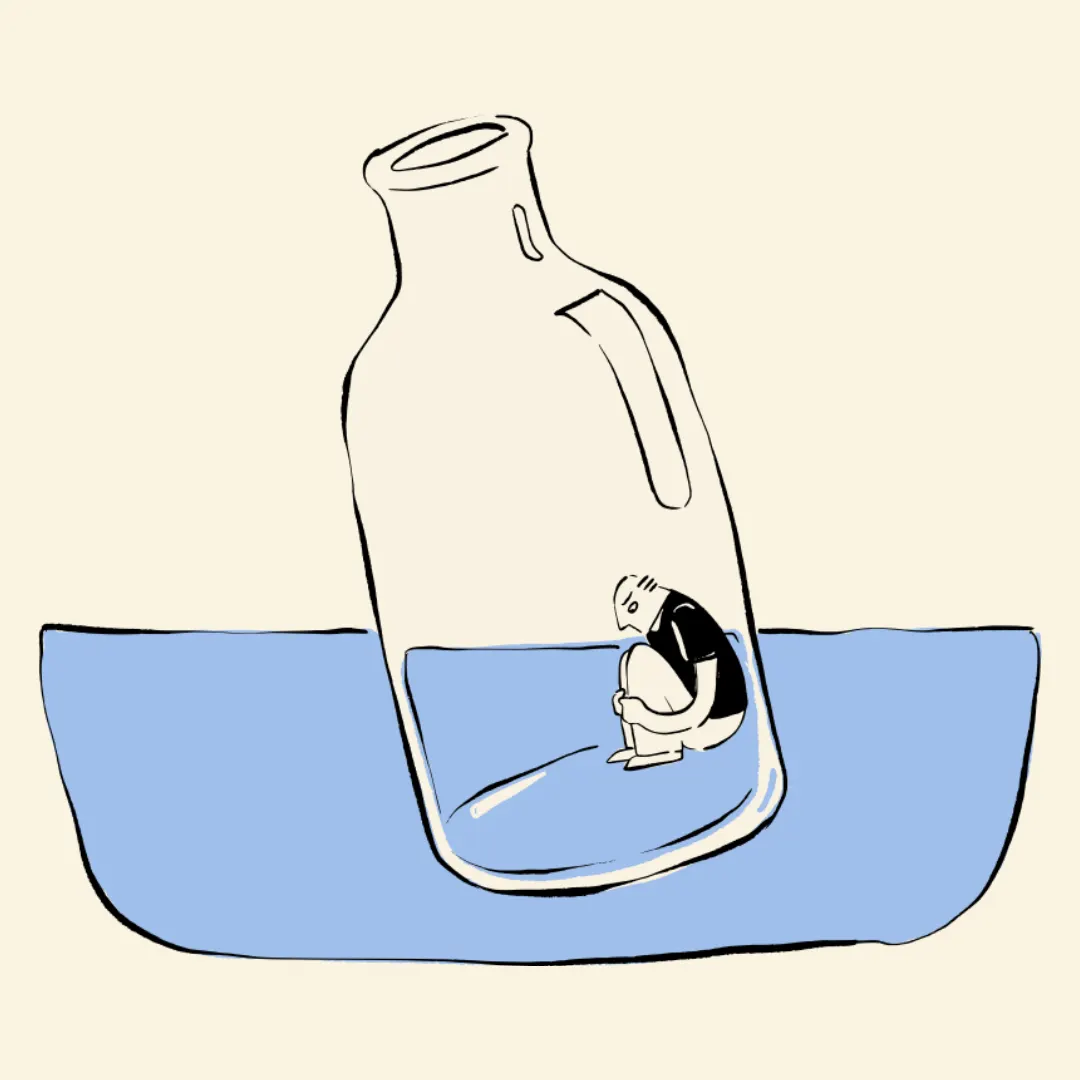
Freud drew a line that helps here. In mourning, he wrote, the world feels poor and empty; in melancholia, it is the self. The mourner says “I have lost something.” The melancholic says “I am nothing.” What I hear from young people today is the second sentence, with a ranking attached: behind whom, compared with whom. That is the vocabulary of a scoreboard, not that of mourning.
The philosopher Byung-Chul Han argues that every epoch has its signature illness. The 20th century fought bacteria and viruses, invaders from outside the body. Ours is marked by depression and burnout, which appear to rise from within.
None of this dismisses biology. Genes, trauma and illness matter, and medication and therapy save lives. However, the popular idea of depression as a simple “chemical imbalance” has not stood up well. A 2022 umbrella review in Molecular Psychiatry, led by the psychiatrist Joanna Moncrieff, found no consistent evidence that low serotonin causes depression. What the research does support is more complicated: the body, the mind, and the social world influence each other. Pressure from the outside does not stay outside. It settles into sleep, into hormones, into the voice in one’s own head, until the market’s judgement and criticism sound like one’s own.
In Pakistan, the ranking begins before a child has learned to read. Nursery admissions come with interviews. Report cards come with positions. Board toppers are garlanded on the evening news, and we have developed a particular appetite for precocity: the youngest author, the youngest CEO, the youngest certified this or that. Achievement only counts if it arrives early.
The fear behind this is reasonable and rational. Roughly two-thirds of Pakistanis are under 30. The Labour Force Survey 2024-25 puts unemployment among 15- to 24-year-olds at 12.9 percent, against 7.1 percent overall. For women with university degrees, it is 23.9 percent. In 2024, 727,381 Pakistanis registered with the Bureau of Emigration to work abroad. Parents read these figures, or live them, and as a result, they push.
The results can be seen on LinkedIn. A friend’s younger brother showed me his profile. He was seventeen, and his headline carried three titles. Scrolling through other people’s pages, he said, in passing, that he already felt late.
When I left a job a few years ago, it was a student who told me I should have a LinkedIn profile; I had barely heard of it. Now first-year undergraduates call themselves founders and ambassadors. What they are losing is their bachpan, the years in which a person may be curious without an outcome and bad at something without it going on record. Intelligence needs that room to develop. The race in this system rewards only the performance of it, and in doing so it kills the real thing before it has grown.
The damage is physical. The neuroscientist Robert Sapolsky, in Why Zebras Don’t Get Ulcers, observes that a zebra’s stress response switches on while a lion chases it and switches off once the chase ends. Humans can trigger the same response by thinking about rent, status, or the future, and can keep it running for years. Scientists call the resulting deterioration ‘allostatic load’: disrupted sleep, weakened immunity, worse memory and mood.
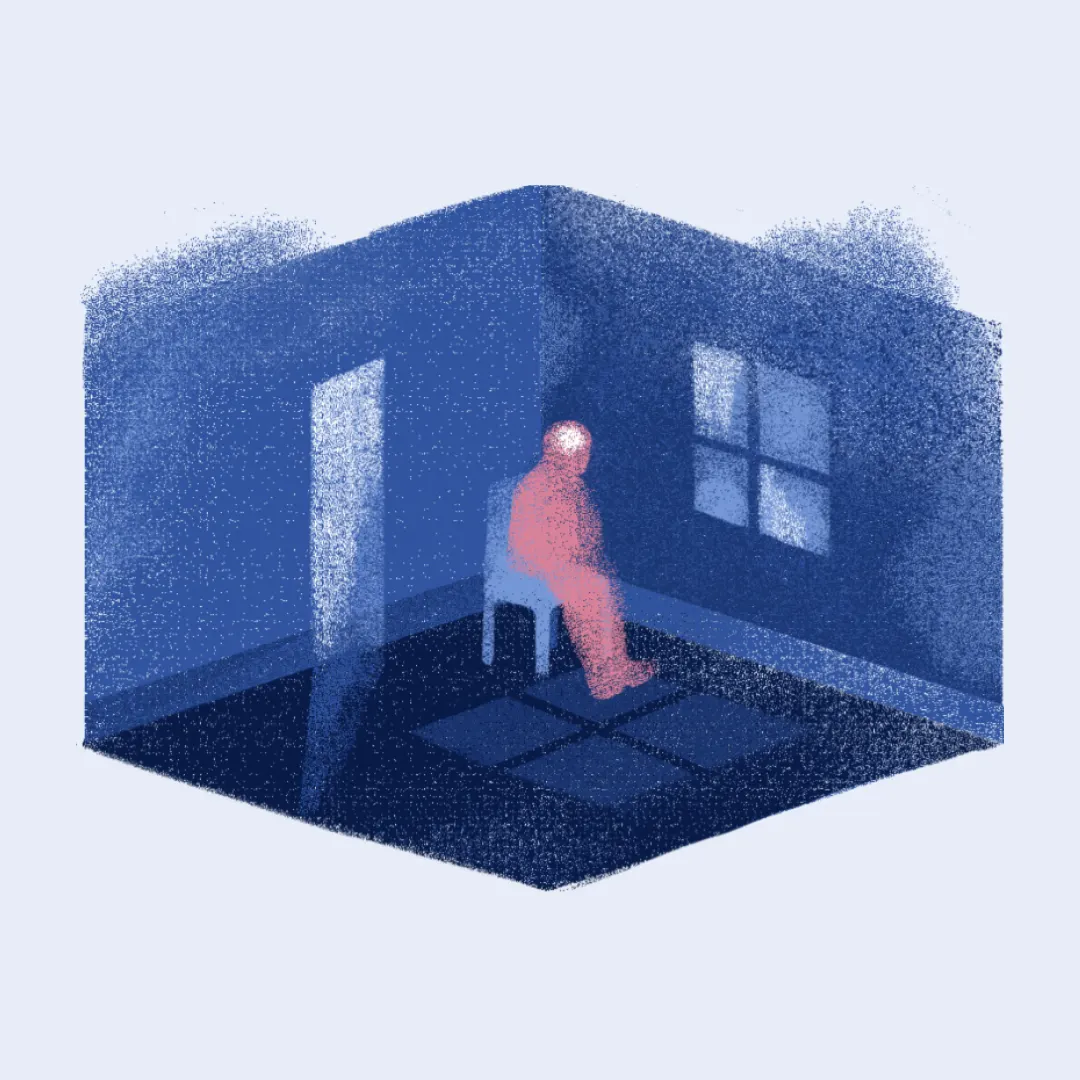
Put plainly, a person who has been raised on insecurity lies down at night and the body refuses to stand down. It has learnt that stopping is dangerous. I do not know how anyone is supposed to stay well in that state, and I worry about what a whole generation raised in this way will look like at 40.
In his 1844 manuscripts, Karl Marx outlined four kinds of alienation under capitalism: from what the worker makes, from the work itself, from one’s own human nature, and from other people. If we read that list today, it reads like a description of somebody with an active social media presence. Marx here talked about alienation of labour; however, under these circumstances, this alienation is spreading to the middle and upper-middle class in society.
Pressure from the outside does not stay outside. It settles into sleep, into hormones, into the voice in one’s own head, until the market’s judgement and criticism sound like one’s own.
The product we are most estranged from now is ourselves. We assemble a version of our lives for an audience and slowly stop recognising it. Rest has to become content; recovery needs a caption. Classmates and colleagues become a leaderboard.
This is why the depressive thought so often takes the form “I am useless” rather than “I am sad.” Useless is an economic judgement. It means having no use value and no exchange value. When a young woman calls herself useless for spending a month reading and sleeping, she is applying the market’s measure of a person to herself: you are worth what you visibly produce.
And when we fail that measure, we do not question the measure itself. We turn on ourselves: lazy, weak, a waste of space. That is how a market teaches people to hate themselves. It does not need to insult anyone. It hands us the ruler and lets us do the rest.
Han refers to this as the shift from a discipline based society, which said, “you must not”, to an achievement based society, which says “yes, you can”. This seems to imply freedom. But if you can do anything, every shortfall is your own fault. Nobody needs a foreman anymore; we supervise ourselves and call it ambition. Capitalism’s most efficient move has been to turn exploitation into a personality trait.
Psychologists Thomas Curran and Andrew Hill analysed data from 41,641 university students in the US, Canada and Britain, collected between 1989 and 2016. Every form of perfectionism rose over that period, but the sharpest increase, 33 percent, was in what they call socially prescribed ‘perfectionism’: the belief that other people expect you to be flawless or ‘perfectionist’. It is the form most intricately linked to anxiety and depression. Their explanation points not to mobile phones but to the spread of market competition into schooling, work and private life.
Pakistan now feeds that pressure through 79.9 million social media user identities, according to DataReportal’s end-of -2025 figures, a rise of a quarter in a single year. People once measured themselves against a few dozen neighbours and classmates. Now there are thousands of strangers, seen only at their best.
A second-year student told me she deletes Instagram before her exams to protect her concentration, then reinstalls it the same night “just to check if I’m missing something.” There will always be something to miss. That is the design. Attention is the raw material these companies sell, and every scroll is unpaid labour. Snapchat’s “streaks”, which punish users for missing a single day of posting, make the logic explicit. Whenever a new platform launches, a new race begins to be on it first, to build a following, to stay current everywhere. I cannot keep up with it, and I do not believe anyone can.
Researchers still disagree about how much social media itself causes depression. Jonathan Haidt argues it is the main driver of the rise in teenage anxiety; Candice Odgers and others say the causal evidence is thin. Both camps are looking at the tool. Social media did not invent competition. It industrialised a ranking that capitalism had already installed and made it portable and public.
Consider a composite that anyone who has hired or mentored young people in Lahore will recognise. Her first job is an unpaid internship. Her second is a three-month contract. Her third comes with a probation period that is extended twice. Rent rises faster than her salary, and if she falls, there is no floor beneath her. She is not unusual: the latest Labour Force Survey finds that more than 72 percent of non-agricultural jobs in Pakistan are informal, without contracts, security or social protection.
This insecurity is useful to employers. Marx called the unemployed a “reserve army of labour” whose existence disciplines those still in work. The economist Guy Standing calls today’s version the precariat. A frightened worker does not ask for a raise.
Then the market moves into the rest of her time. Friendship becomes networking, hobbies become skills, sleep becomes recovery for tomorrow’s output. When she collapses, she is told to fix her routine, download a meditation app and practise gratitude. The late cultural theorist Mark Fisher called this the ‘privatization of stress’: suffering with obvious social causes is recast as a private chemical fault. Some of those remedies help, and people should use whatever helps. But nobody asks her employer or her landlord to change, and the same market that exhausted her is happy to sell her peace via monthly subscription.
What goes last is her belief that anything could be different. Fisher saw this in his students and named it “reflexive impotence”: knowing things are bad and being certain nothing can be done. Of all the things this system produces, this certainty may do the most harm.
An argument like this can easily become one class talking about itself, so I want to be precise about who it describes.
The LinkedIn headlines and fellowship announcements belong largely to the middle class and to those trying to enter it. Most young Pakistanis are not polishing profiles. They are delivering food in 45-degree heat, breathing cotton dust in textile units, working off family debts in brick kilns. The Labour Force Survey puts the average working week at 46 to 48 hours. Many of the young workers I have met in labour reporting have never had the luxury of wondering whether they are doing enough. They are doing all they can, and it barely covers food. For them, capitalism does not creep in through a feed. It arrives as hunger, debt and fatigue.
Friendship becomes networking, hobbies become skills, sleep becomes recovery for tomorrow’s output. When she collapses, she is told to fix her routine, download a meditation app and practise gratitude.
And yet the same word crosses the divide. The graduate scrolling at 2 AM calls herself useless. So does the young man laid off after years of 12-hour shifts, sitting at home while his family watches him: main kisi kaam ka nahin. Neither is likely to see a psychiatrist. Pakistan has roughly one psychiatrist for every 360,000 people, according to a recent paper in the Journal of the Pakistan Medical Association; the WHO benchmark is one per 100,000. Services cluster in the cities, while most of the population is rural. Among the poor, depression is seldom diagnosed; it is simply called life.
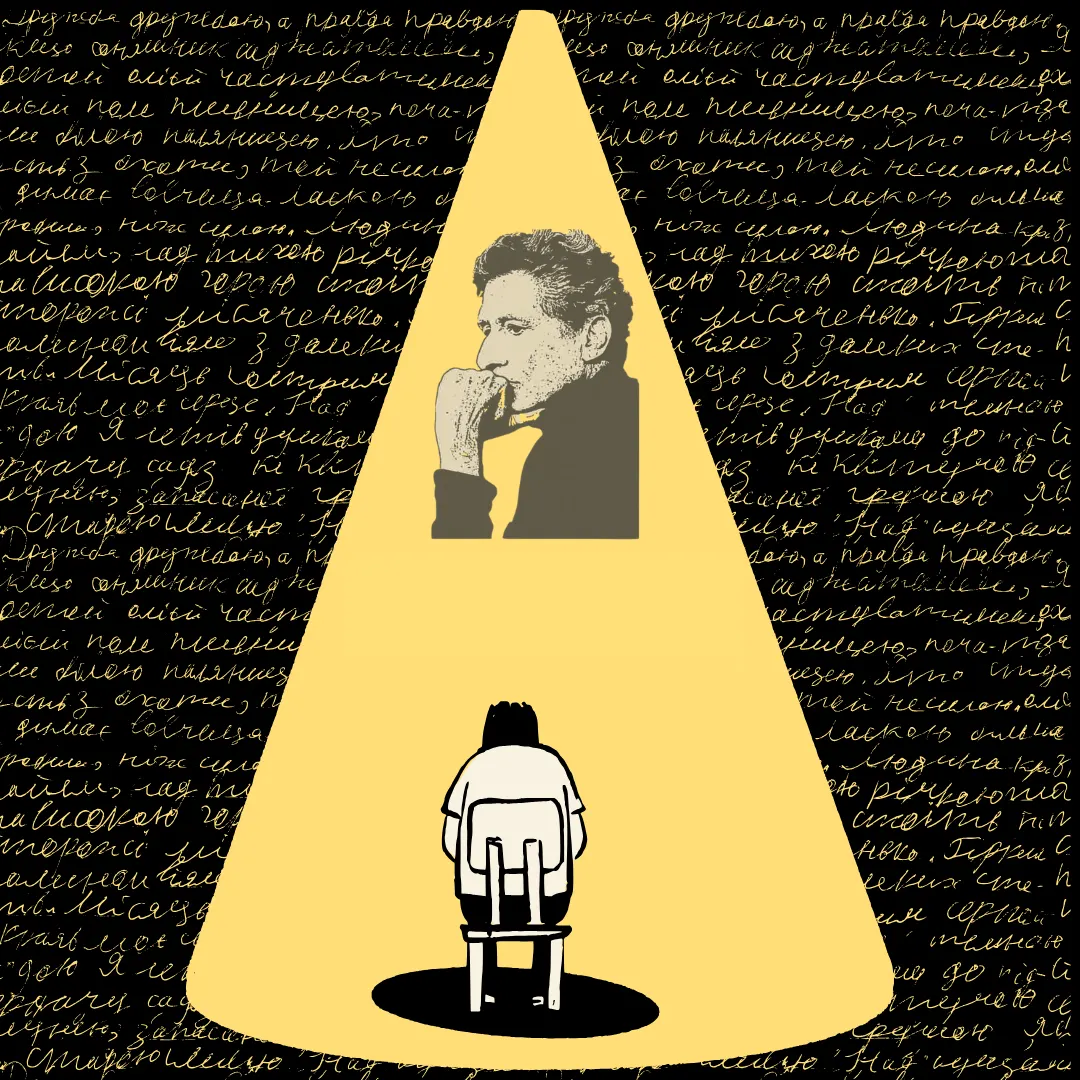
Fisher, who grew up in the working class, wrote an essay titled Good for Nothing about the voice he carried inside him, telling him he was not clever enough and not built to matter. He came to see that the voice was not his own. It was the class system, speaking from inside his head.
The feed wears down the middle class through comparison. The market grinds down the working class through survival. One is told it is not achieving enough, the other that it was never meant to achieve. Both are measured with the same ruler, and as long as each believes its pain is private, neither will recognise the other.
Those who have some choice find that by stepping off track, they are punished for it too. A friend took a year off to recover. At one wedding she was asked three times what she was “doing these days”. Nobody meant harm, and each question made her smaller. The message was clear enough: she was contributing nothing to the market.
Erich Fromm warned in The Sane Society that adjusting well to a sick society is no evidence of health. Young people today are caught in exactly that bind. Stay in the race, and the body burns out. Leave it, and the punishment is judgement and isolation. Calling this pessimism misses the point. A diagnosis is the first condition of any treatment.
If depression were purely a private defect, the only remedy would be private repair. If a large part of it is produced socially, then part of the remedy has to be social. I have seen what that looks like, in small rooms rather than grand ones. A study circle where a woman admits she has not slept properly in months, and three others nod. A gathering of young journalists where one says he feels like a failure, and after a silence someone says, “Me too.” Workers discover that the exhaustion each carried home alone has a shared cause. The shame loosens, and a private wound becomes a public fact that can be organised around.
Fisher called for mental illness to be repoliticised: not denying that people suffer in their minds, but tracing that suffering back to the conditions shaping those minds. In Pakistan that means therapy and medication that people can actually reach, but it also means written contracts and enforced minimum wages, social protection that extends to informal workers, counselors in public schools and universities, and pressure on platforms designed to exploit insecurity. Globally, the WHO says governments spend a median of just two percent of their health budgets on mental health. These are not soft issues. They are health policy decisions.
In the same ghazal in which Ghalib could see no way forward, he asked another question:
Maut ka ek din muayyan hai
Neend kyun raat bhar nahin aati
Death has its appointed day. Why, then, does sleep not come all night?
More than a century and a half later, a generation lies awake asking the same thing, and we may have an answer for Ghalib: sleep does not come because the body has been told, every day, that stopping is dangerous. That was never a fact about us. It is a rule of the market.
I often think about the 17-year-old with three titles. If I could return to that afternoon, I would not offer him any career advice; I would tell him he is not late, that there is no clock, and that the years he is being asked to spend proving himself are the years he was meant to spend becoming himself. And I would tell him that the graduate scrolling at 2am, the worker with no shift to go to, and the woman shrinking at a wedding are lying awake at night with the same question that he is wrestling with.
We are not useless. We were measured with the wrong rules, and rules can be broken, redefined, and rewritten by a useless generation to live a livable life. We do not want to suffer in mind; our sufferings are not individual but socially determined, and that social system needs to be changed with the new rules of collective interdependence and harmony with nature.

Sasha Javed Malik is an investigative journalist, academic researcher and writer. From the newsroom to the classroom, her work traces how power in Pakistan shapes lives: on the factory floor, in women's bodies, and in young people's minds.