It is 2016. Although it is September, not a day goes by where my friends don’t complain of the heat; the summer seems to have lasted an entire year. Nonetheless, we have returned to the Govt College Lahore Campus and the fall semester is underway. On the way to university from Anarkali, I come across fallen pigeons, thirsty crows, and stoners that sleep in the unbearably warm shadows of the trees in Nasir Bagh. The traffic is relentless. While crossing roads, it often feels like walking in the midst of a herd of horned cows in some savannah. There is still dust in the air, even though the manual laborers started renovating the walls and floors of the main building at GCU more than a year ago.
Every week, opposite Shahab garden, we are cramped into a class with a tall roof and wooden benches that have been scribbled on with pens and markers, and even carved into by knives for decades. Though there is an air conditioner in our class, it seems glued to the wall at the back entirely for decorative purposes. We are reading Orientalism by Edward Said and the teacher draws the progression of the relationship between the East and West on the white board and shows us how even before colonialism that started with Renaissance, the West patronized the East for millennia, stereotyped it, and fabricated fictional images of the Orient for its imperial goals.
As the conversation turns towards language, identity, and English, sitting in a wooden chair at the front of the class, I feel an unpleasant collapse in my chest, as if some dangerous animal has been let loose, which slowly unravels into fear and guilt. I feel terrible because, for several years now, I have been writing in English. And given how ambitious I am, I have imagined myself writing novels upon novels in English to express myself through images and stories in a language that arrived, thrived and survived in the subcontinent because of cruel and unjust domination and the imperialist designs of the British.
He was teaching us in an English medium school, and often taunted us bitterly by calling us the spiritual children of Sir Syed Ahmad Khan.
Over the next few weeks, the guilt drives me into a dark alley of depression as I stay up late at night, walk the dingy streets of Anarkali until the brazen, yellow streetlights are subdued by the imminent dawn. At the age of 22, I walk every day from Anarkali to the backside of Jinnah Bagh to teach English to a doctor’s son, write blogs for different clients on homeopathy, and help lazy students with their university assignments – unethical to be sure, but I do it to survive. And yet none of this demanding work feels as brutal as the onslaught of this guilt for having betrayed my origins, my language, and the people I belong to. And then, I ruminate over the question, did I ever belong in the first place?
Over the next few weeks, the confusion about my own identity as a person and as a writer churns in my head as if someone has put pebbles and iron locks into a blender instead of bananas and milk. Growing up in Wana after 9/11, I had always felt destined for defeat; writing had seemed like a path that could help me live a life of creativity without losing my principles. But with Edward Said and the immense guilt and shame I now feel for writing in English, I feel the very ground of my ambition begin to collapse under me. Since I have not thought of doing anything besides creative writing since the age of 15, I am left unmoored by the havoc inside me; not only do I question my ambitions and my love for storytelling, but the whole experience also challenges my sense of self in ways that I don’t feel equipped to tolerate and understand at this young age.
But this ambivalence, this attachment and regret for the English language wasn’t provoked by Edward Said alone. Over time, I was able to think about my own past and put together the pieces to make sense of the entire sequence. As a young child, I went to an English medium school where corporal punishment was a frequent event. We sat on the ground on dusty Mazari palm mats. Our classroom walls were covered with saccharine drawings of flowers, and the obligatory Muhammad Ali Jinnah quotes translated into Urdu and Iqbal’s verses. We had an Urdu teacher, who had gone to fight in Afghanistan in the 90s when the Taliban began claiming autonomous territories from local warlords and military commanders in the aftermath of the fall of the Soviet Union. He had studied the classics of Urdu, eulogized Ubaidullah Sindhi and Abul Kalam Azad, and beat us with sticks and kicks whenever he lost his temper. He was teaching us in an English medium school, and often taunted us bitterly by calling us the spiritual children of Sir Syed Ahmad Khan, who among religious scholars of his day was criticized for surrendering his dignity and intellect to serve the agenda of the British Empire and colonialism. The same teacher shamed us for watching English movies, decried our spiritual bankruptcy, and declared that we would fail to live up to his ideals of moral purity. I was 11 at the time, and had clearly not played any role in the rise of Sir Syed Ahmad Khan, or served the British Indian Army while marching on the tribal areas, or even been responsible for the prominence which English enjoyed in Pakistan’s education and governance after Partition. And yet, his moral tirades, his beatings, and his taunts provoked intense fear and guilt in me for simply following the lead of my parents and studying in an English medium school where I was admitted at the age of 4. There was no one to question our Urdu teacher, to demand that he not lash out at young children for historical events that happened decades and centuries before our births, and dissuade him out of his coercive self-righteousness.
The religious teachings in childhood and the force-fed advice of parents and teachers had always felt so absolute to me as a child, and it was only in reading novels in English that I felt the courage to think, to question, to doubt, and to access my own feelings and emotions, even if they hurt.
Later, when I was in grade 7, I got admitted into Cadet College Razmak. Although I felt I was too young to leave home quite yet, I hated my school and the fights at home were so unbearable that I was yearning for change. However, the beatings and humiliation from school followed me to Cadet College too, where the teachers and staff had absolute authority over the safety of the young students. They could beat you, curse you, and keep you awake all night if they wanted. But I found hope in the massive library of our Cadet College. Until then, I didn’t know that such a thing as novels existed. I began to borrow books from the library, and later bought some from old bookshops in Peshawar with my pocket money. By the time I was 17, I had read books by Jane Austen, Ernest Hemingway, and Will Durant. One day, I was reading Anna Karenina in our apple orchard in Wana, while ripe apples fell now and then with a thud and honey bees and wasps bit into the soft flesh of those delicious, wounded apples. I had a series of epiphanies, much like Stephen Dedalus. Until then, for various reasons, I had not felt like an individual with my own life, feelings and values. That afternoon, for the first time in my life, I felt that I was someone who could shape his own future and destiny. Growing up in Wana, 9/11, the rise of the Taliban, military operations, hurts and conflicts at home: everything that had happened to me since my birth had lain scattered in the lumber room of my mind like those colorful entangled yarns found in thrift shops. I realized that all the feelings and impressions which before had appeared to me as painful and abstruse could be deciphered now with the aid of books. While reading Tolstoy, I felt less scared of my own mind and life; it had become possible for the first time to make sense of the world. Stories about characters in 19th century Russia felt more familiar, intimate, and comprehensible than my own family, who could be spoken to, but never seen vividly and understood as the men and women of Tolstoy were. Even more shocking was the possibility that someone as humorless and unimaginative as myself could try to write stories too. I craved more books in English, originals and translated, and I savored the words like a thirsty man, someone who needed all these metaphors and images to nourish himself. Until then, I had never read a book in school or otherwise which was written in Pashto, since the language was never part of our syllabus. I had never come up with a metaphor or an image in Pashto. In the English translations of Tolstoy’s novels and Rosseau’s Confessions, I saw not only myself but other people too, and for someone who had since childhood felt confused about elders, their desires, motives, anger, hostility, and hate, it was in the English language that I began to read myself, write my diaries, and make sense of life itself. So intense and life-affirming were these realizations that I set out to study the English dictionary, compiled list of quotes in handwritten notebooks, and tried to learn everything about this foreign language that had not only enabled me to enjoy stories, but also made me see myself better – as someone with his own thoughts, his private emotions, and his own nascent sense of right and wrong. The religious teachings in childhood and the force-fed advice of parents and teachers had always felt so absolute to me as a kid, and it was only in reading novels in English that I felt the courage to think, to question, to doubt, and to access my own feelings and emotions, even if they hurt. Nobody was shaming me or stuffing guilt-soaked verdicts into my head like before, and for the first time I could experience life as it was. Though it all felt painful and my diaries were dark and menacing, at least I finally felt free to know myself and the world on my own terms. In short, the English language allowed me to see life for the first time without any burden, guilt, and forced loyalty.
Stories about characters in 19th century Russia felt more familiar, intimate, and comprehensible than my own family, who could be spoken to, but never seen vividly and understood as the men and women of Tolstoy were.
However, my devotion to English didn’t translate into a similar love for British literature. When I came to Lahore and enrolled at Govt College to study literature, I couldn’t find my way into poetry and storytelling, and remained limited to diary writing and future plans. We read Chaucer, Keats, Shakespeare, Henry Fielding and Wordsworth, and yet nothing in them felt familiar or inspiring, because the worlds they created were so far away and alien to the one I was living in. I wasn’t reading for self-reflection and pleasure anymore, and was struggling to see the physical and emotional contours of life in Wana and Lahore. I often wondered if I had made a mistake in leaving Wana and imagining a life where I didn’t belong to my parents, my mother tongue, and the people I came from, but only to myself and the people I chose to accompany. That was until I discovered Pablo Neruda’s poetry, and his images of mundane objects and nature struck a chord in me – because those poems could have been written in Wana too. For the first time then, I began to write poems in English. Translated works into English were rescuing me once more. I read Marquez and though his towering genius awed me, I could see in his works a reality that I found I could imbibe and inhabit. Around my graduation year, a researcher from the Institute of Development Studies in the UK wanted someone to help him conduct interviews with families in Waziristan, and I took up the part-time job. In the later stages of that research, I was visiting Wana regularly and trying hard to write a novel in the imitation of A Portrait of the Artist as a Young Man but set in Lahore. During these visits to Wana, it dawned on me that instead of writing about Lahore, I could write about where I come from, even if I didn’t belong to Wana anymore. And then, a year or so later, I was writing my first manuscript, Clay Bodies, in English.
I never felt inspired to write a new metaphor or compose a verse in any language other than English.
My ambivalence towards English didn’t subside all of a sudden. It took me time to feel comfortable in English. What helped me undeniably was that English as a language was never forced on me. I could think and express my feelings in English in a way that had never happened in Pashto or Urdu. I never felt inspired to write a new metaphor or compose a verse in any language other than English. With the passage of time, I didn’t feel anymore that I had betrayed my mother tongue since there was no deep-seated intimate relationship with Pashto in the first place and I gradually admitted to myself that I would always be someone who didn’t belong to his original home, and I didn’t need anyone’s permission to perceive the world in English or write about my childhood in English.
However, despite my private reasons and love for the English language, other people don’t always see my decision to write in English as innocent. When I was at Government College, the young Urdu poets in the debating society were always skeptical of myself and other young English writers. Even now, as recently as a few months ago, an elderly man commented in Urdu on one of my videos on Instagram: why do university educated people in Pakistan feel such a shame in speaking their mother tongue, or Urdu even? Telling someone that I was never taught to express myself in my mother tongue and that Pashto was not taught as a language in school – hardly a personal decision – is somehow not seen as a sufficient response. And people who most align themselves with Urdu are likely to see my choice of English only as a betrayal, as a selling of one’s soul, and never something that I did out of love and inspiration that I experienced in the English language. Recently, during a Q&A session at Govt College Lahore, a student asked me, since you guys claim to write about the mundane reality in Pakistan, what were we (my fellow English writer and I) doing to reach the common people of this country? Though he didn’t mention English, I could understand his fairly valid concern that by writing in English, we were excluding people from a certain class, and certain backgrounds, from access to our ideas and stories. I told him that he could blame us for writing in English but there are many writers who work in Urdu, Pashto, and Punjabi, but hardly anyone reads them. In fact, if I were to write in Pashto, my parents would still never read me because they simply don’t read. It is convenient to criticize anglophone writers for their choice of language, but the truth of the matter is that it is an impossible demand from young writers to somehow change the literacy rate and the demographics of readers in this country. Too many people are quick to criticize the dozen or so Anglophone writers in the country, yet I have not seen people object to English in schools or colleges or the fact that English is an official language in Pakistan. Every time someone chooses to write in English though, a renewed spirit of nationalism seems to take over some people, as if these English writers are at fault for refusing to salvage Urdu, and not the entire system which has been running in the opposite direction for seven decades. People object to an Anglophone’s writer’s choice of language as if it was a moral choice made at the age of 30 when in fact, when I look back, so many things, so many small impressions, conversations, teachers, books, and experiences happened before it turned into a love for this language and the decision to write in it.
Every time someone chooses to write in English, a renewed spirit of nationalism seems to take over some people, as if these English writers are at fault for refusing to salvage Urdu, and not the entire system which has been running in the opposite direction for seven decades.
Another question that I have been asked several times and have seen being discussed in conferences and literary festivals is: how is it possible for someone to write about a family, a community that one has experienced in one language in another language altogether? This question doesn’t make sense to me because I read Tolstoy and Marquez in translation and thoroughly enjoyed them. I would even say I treat my own work as a work of translation in a way as well, where both writing and translating happen within me. It is a common assumption that one’s physical and emotional reality can be best expressed in one’s mother tongue, but, in my experience, the opposite is also possible. But, at the end of the day, how many justifications and explanations can one gather to defend one’s choices? When one is young and impressionable, one can’t help but engage with things that are approved of by others, and this pressure to conform, to stay loyal to the established moral narratives is at its most fierce. However, ultimately one must belong to one’s own self before belonging to anyone or anything else.
In 1817, John Keats wrote a letter to his brothers, talking about negative capability, and described it as such: “when a man is capable of being in uncertainties, mysteries, doubts, without any irritable reaching after fact and reason.” Contrary to family, school and society that wanted to claim me, and promise me belonging and certainty, I found myself a medium – in English – where I could express my own fears, doubts and stories, and embark on a journey, a trajectory that belonged to no one but myself alone.
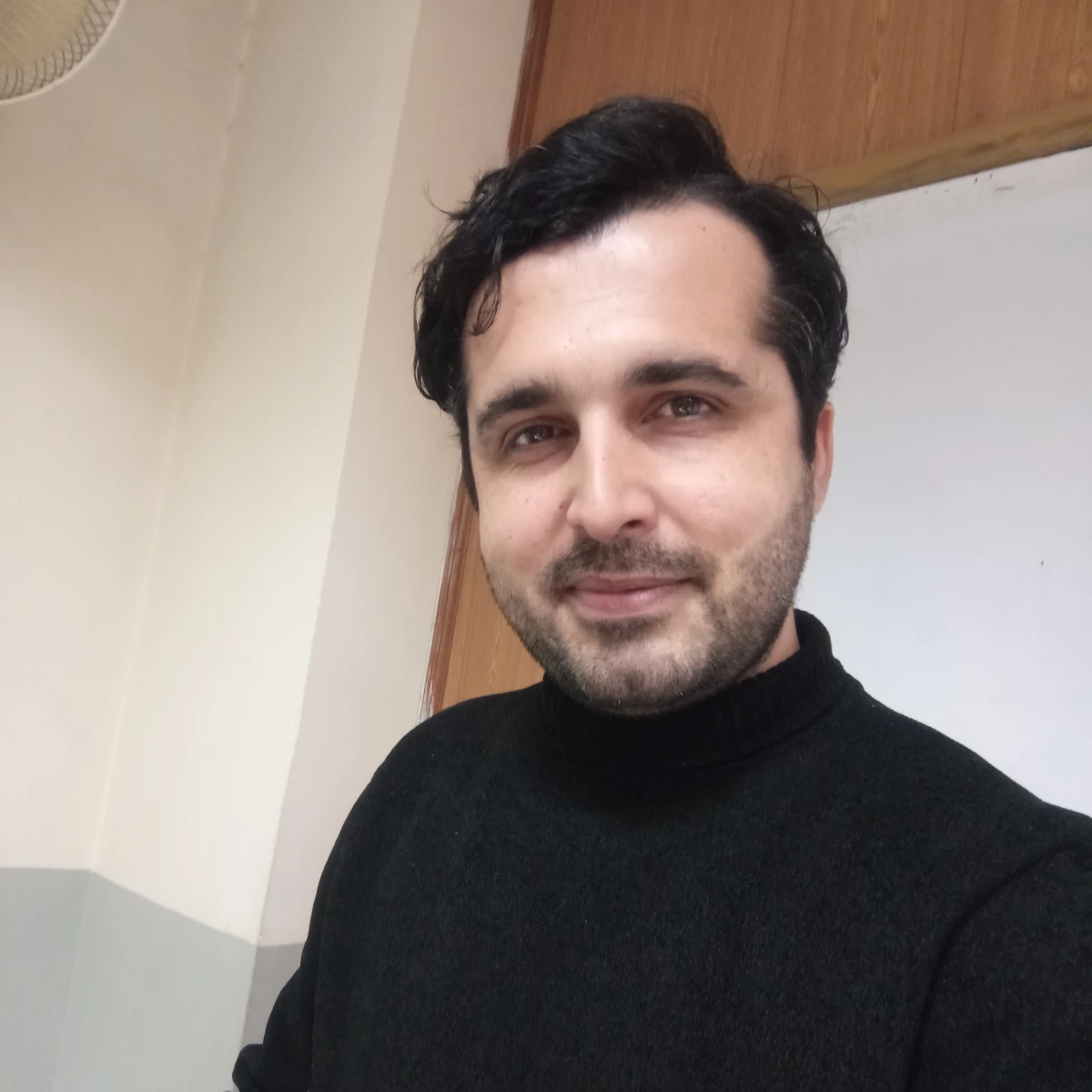
Noor Rehman is a writer, lecturer, Fulbright scholar, and failed influencer. Like all creatives, he suffers in equal parts from a sense of inferiority as well as narcissism. The only normal things about him are his love for tea, a fear of heights, and an appreciation of Leonard Cohen's music.