The LoC
In 2013, aged eight, I pressed my face against military binoculars bolted to an iron tripod and searched for someone looking back.
The bunker at Chakothi smelled of grease pencil and damp concrete. Through the lenses the Jhelum came rushing forward, loud and brown, and on the far bank an Indian post clung to the forest like a barnacle. Tiny figures moved around it. I waved. I remember being mildly offended that nobody waved back, which is diplomacy as an eight-year-old understands it.
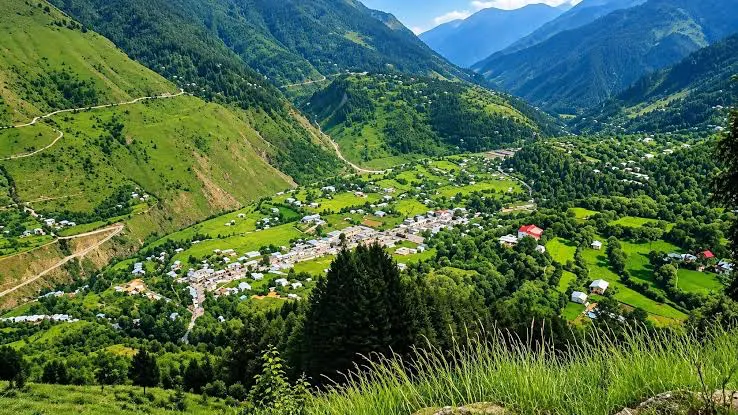
Chakothi sits about fifty kilometres from Muzaffarabad, where Azad Kashmir ends and the Line of Control begins. For most people, it is a headline about a ceasefire broken. For me, it was where we would go to see my father, living inside the radius of an apocalypse that was always about to begin.
A State of Permanent Temporariness
Because my father was in the army, we moved between Rawalpindi and Muzaffarabad, and then endlessly within Muzaffarabad, carrying our rugs and tin trunks from one cream-walled apartment to the next. Time in a cantonment does not pass so much as accrue, mostly in absurdities.
Take Captain Rashid, for example. The battalion pronounced his name "Rasheed," dragging the second syllable like a jeep stuck in the wrong gear, and so, one morning, he resolved to fix it by executive order. From now on, he would spell it Rachid, which unfortunately just gave everyone a clean upgrade to a clipped "Ratchet.”
Then there was the Major, who spent months on the northern ridges and finally returned home bearded, smoke-scented and blinking like a hermit on day parole. For four days, his two small sons treated him like a visiting dignitary. They showed him their toys. They let him sit on the good sofa. They climbed him like a hill station, and he, delirious with gratitude, let them. On the fourth morning, while he shaved upstairs, the older boy cornered their mother in the kitchen, still chewing his toast.
"Mama," he whispered. "Ye chachu kab wapas jaiengey?" ("Mama, when is this uncle going back?")
I think of those two stories whenever I think of borders. A name can be redrawn in a morning, and a father can become a stranger in a season. The line, it turns out, is a very easy thing to build.
The First Horseman: Weekend Armageddon
Just a year earlier, the world had been scheduled to end. I knew this because the news said so, repeatedly, accompanied by the glee of anchors who would not be required to attend. The forecast called for a full-blown apocalypse – brought to us by an expiring Mayan calendar, a rogue planet on a collision course with Earth, or a solar flare large enough to incinerate the atmosphere.
I was seven, and spent that week in a state of frantic virtue; at one point, I even confessed to my cousin that his chips were soggy only because I had been licking the spice off them before slipping them back into the packet.
A name can be redrawn in a morning, and a father can become a stranger in a season. The line, it turns out, is a very easy thing to build.
My mother, who had also seen the news, announced that we would be spending the weekend with Papa in Chakothi. She had clearly decided to starve the apocalypse of any attention. Then, she packed like she was hunkering down in a doomsday bunker: five spare cardigans, a carton of water (or was it canned fruit?), and Panadol, Brufen, Avil and Flagyl.
I watched her fold my freshly pressed trousers into the suitcase, crisp on their wire hangers, and marvelled at her priorities. If the world was about to be turned upside down by a geomagnetic shift, would my pants not just fly off into space anyway? Apparently not.
"It's just the weekend," she said, for the eleventh time.
The room my father had been allotted in Chakothi was a tin-roofed shed, and by the time we arrived, it was clear that the architect had not planned for a family of five, let alone the apocalypse. It had one bed. My mother, my sisters and I lay on it in a row – like sardines in a tin that was itself inside a tin – staring at the corrugated ceiling, waiting for noon to strike.
By 11:58, the mountain cold had firmly settled into the iron, and the tin roof began to tick like a clock with a stammer. Tick. Tick. I squeezed my eyes shut, half-expecting the sky to tear open, half-expecting angels to descend and usher me into heaven on account of my youth. Surely a few small lies did not count when you were only six.
11:59. Silence.
Noon.
Right on the hour, a heavy thud hit the corrugated sheets above our heads.
The four of us stopped breathing entirely. Then came footsteps overhead. My heart hammered against my ribs. Was this it? The geomagnetic flip? The first wave of the end?
Slowly, the steps paused. A raspy, mundane caw echoed through the tin.
A crow. Just a crow taking its time.
12:01. 12:04. The sky remained firmly where it belonged. My mother turned her head on the pillow, smoothed her dupatta, and said, with enormous dignity, "See? Weekend."
That same afternoon, sitting among armed men, I wrote my first essay about Chakothi. It ran four paragraphs long, and three of them were about leaves. The world ends far less often than advertised. But looking across the Jhelum at the Indian post, I wondered if any of their young soldiers too had spent noon staring at their own tin ceiling, terrified of the sky falling. Had the apocalypse actually descended, would they not miss their mothers?
Dads, of course, were optional. One could live without them, kind of.
The Bridge
The road to Chakothi climbs through wet green forest to a village whose importance is vastly out of proportion to its actual size. In April 2005, the Muzaffarabad-Srinagar bus crossed the Peace Bridge, the first such service in nearly six decades, carrying divided families who had been writing letters across the water for a generation. In October 2008, trade began, goods rolling over the same river. By 2013, it all felt, to a child, almost routine.
The bridge itself was wooden planks over a roaring Jhelum, and somewhere in the middle was the invisible stitching of the border. A soldier would solemnly lift a white flag. Through the binoculars, you could see families on the far side in a landscape indistinguishable from ours.
Naturally, this gave me strategic ambitions. I proposed to my father one afternoon that we skip the paperwork, slide down the bank, and wade across to settle scores with Kokila on behalf of Gopi Ji ourselves. He looked at me with bone-deep fatigue and informed me that the river was probably mined.
Alas, denied a cross-border raid, I could only pray for Kokila to tumble down the haveli stairs and die.
The world ends far less often than advertised. But looking across the Jhelum at the Indian post, I wondered if any of their young soldiers too had spent noon terrified of the sky falling.
The Second Horseman: Seven Saladins
I inherited my enemy the same way I inherited my cricket team – before I could walk, and with no right of appeal. It took my father’s stories, told years later, to reveal what that enemy actually did with his days.
One of his posts sat on a ridge so close to the Indian bunkers that both sides could have identified one another's laundry. One afternoon, a voice came roaring across the valley from the top of an Indian bunker.
"Call your officer! Our officer has something extremely important to say!" My father, as the attending officer, made the long walk down to the Pakistani bunker, rehearsing a crisis in his head.
The hotline phone was handed to him. A polite voice came on the line. "Hello, sir. How are you? How are your troops?"
"All fine," said my father warily.
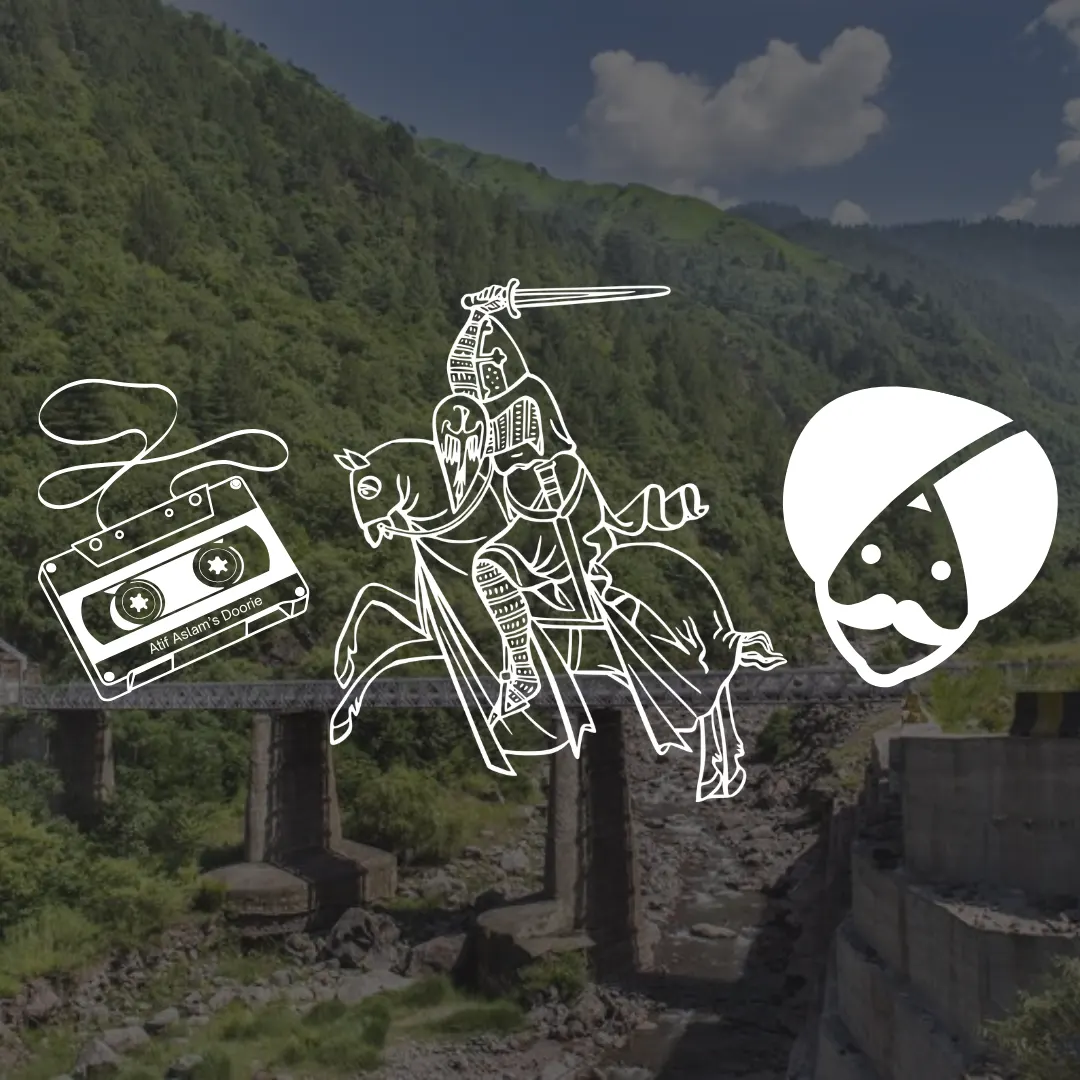
"Sir. It's very important." A pause, the sound of a man collecting himself. "Sir, I need Atif Aslam's cassettes."
On another day, the hotline rang again.
"Sir," the voice on the other side sounded broken. "Do your men play Stronghold Crusader?"
"Sometimes," my father offered.
"Sir, how do you deal with Saladin? He is an absolute nightmare. He doesn't sleep, he doesn't negotiate, and he just sent fifty horse archers into my grain storage. We've been stuck on the same skirmish for three weeks."
"You're sending infantry first," my father said. "That's your mistake."
"We tried catapults! We tried siege towers!"
"I killed seven of him on Tuesday," my father replied smoothly.
"Seven Saladins?"
"Seven."
Why had nobody warned me that my enemy’s most pressing crisis was getting his virtual wheat fields torched by a bot?
The Third Horseman: The Pahji
After weeks of me plotting to sneak across, India saved me the trouble and drove a truck onto our side of the post.
Years of evening melodrama on Star Plus had prepared me for greatness. I stood frozen on the gravel, awaiting the historic greeting, certain a man from the other side of the map would step down and thunder one of the three classics: Sat Sri Akal. Ram Ram. Namaskar.
The truck was driven by a Sikh gentleman, in a royal-blue turban and a gleaming silver kara. I never found out what was in the back.
He climbed down, surveyed the post, and said, casually:
"Assalam-o-Alaikum."
It ruined Pakistan Studies for me forever.
Warda Fatima is a writer from Kashmir, currently studying English Literature at Government College University, Lahore.