One fine evening, I watched my last Pakistani drama. If I recall correctly, I was entering my twenties and had become too cool for them. The male actors who once excited me were now just symbols of misogynistic values and toxic romance. The female leads were somehow all the same. So, I gave up on them.
But recently, I was passing by the TV lounge when I saw my mother watching a drama, and it reminded me of Umera Ahmed, an Urdu digest writer I was obsessed with while growing up. What I found so engaging about her writing was largely how complex her characters were; unlike other writers, who mostly centered their stories around an angry young man with terrible values and a sense of entitlement, who predictably met a girl from a poor family who somehow magically fixed him.
Soon enough, I was able to confirm that the drama was indeed written by Umera Ahmed, called Darr-e-Nijat. And how did I know? Because of a dialogue that was based on shame and modesty. And when was it being delivered? When the female character had just been coerced into sleeping with her male counterpart.
That is classic Ahmed. And I have known her not just through her TV dramas, but through the Urdu digests my mom and I hoarded. My introduction to Ahmed was Amarbail, and it kept me hooked because the female protagonist was my namesake, Aleezay. I was over the moon to see my name in a digest. I kept raving about it for a long, long time, and since I was so young and it was a tragic story, I felt even more like the main character.
Then, I stumbled upon the novel version of Zindagi Gulzar Hai in my school library. This was the first time I was introduced to a strong-willed female character in the world of Urdu digests. Kashaf was my spirit animal for the longest time. Since I too come from a middle-class family and have built my career in a field completely unrelated to what I had studied, her character spoke to me. When I was taking two chingchis in the morning to make it to my 8:30 AM class at university and then commuting to Geo’s head office at 4 PM, Kashaf was who I imagined myself to be.
All this to say that I have long admired her as a writer, and I still think her writing has more nuance and depth than most TV dramas, largely written by men. For decades now, she has written about themes that felt under-explored. Kankar is the story of a woman who refuses to endure domestic violence; Kafeel – a recent hit – features a son who supports his mother getting married after decades of abuse at the hands of his biological father. And then there is my all-time favourite Digest Writer, whose female lead Rashk-e-Hina’s character spoke to me because of how she battled classism in the world of literature, navigated her relationship with her family, and made sacrifices and compromises, all while looking for the kind of love she had read about in Urdu digests.
When I was taking two chingchis in the morning to make it to my 8:30 AM class at university and then commuting to Geo’s head office at 4 PM, Kashaf [from Zindagi Gulzar Hai] was who I imagined myself to be.
Ahmed has fixated on a very specific theme in some of her most popular books: religious spirituality. Her book Peer-e-Kamil is a blockbuster hit, and she writes about a very vulnerable and marginalised community in Pakistan: Ahmadis. She has a very specific way of talking about spirituality and religion though; she doesn’t overtly spell out the moral wrong, but instead packages it with a dramatic flourish. Here’s an example.
In her recently aired drama, Darr-e-Nijaat, the story revolves around Zaryab, a bubbly, full-of-life, intelligent woman who is basically the ‘it’ girl. Zaryab is hopelessly in love with Zamil, her childhood friend, who is a classic example of the men you might come across on Bumble if you ever had the chance to use it as a woman in Pakistan. He is rich, supported by his parents, and emotionally dependent on Zaryab in a lot of ways; he fails to get into an Ivy League school and she does, and of course he makes her feel bad about it.
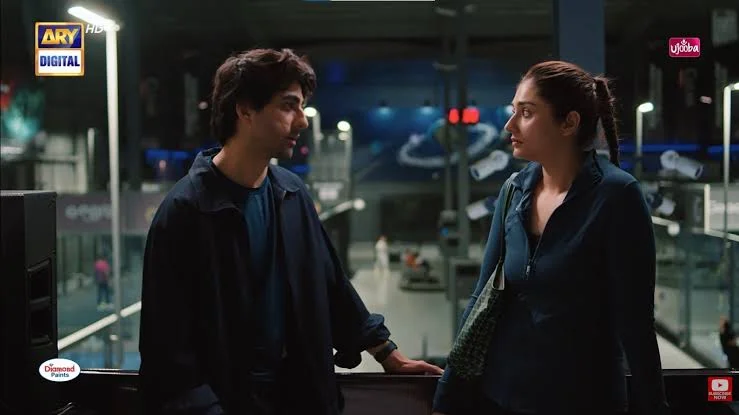
In this relationship, the third pair of eyes belongs to Daadi, played by Saba Hameed, who seems to be the moral compass of the drama. She is a religious woman and very close to Zaryab, and in true Umera Ahmed fashion, she is always blaming the women of the house for all sorts of shortcomings. Zaryab gets emotionally manipulated into sleeping with Zamil, which is coercion, and the first thing Daadi does is lecture Zaryab about how a woman’s entire wealth is her modesty.
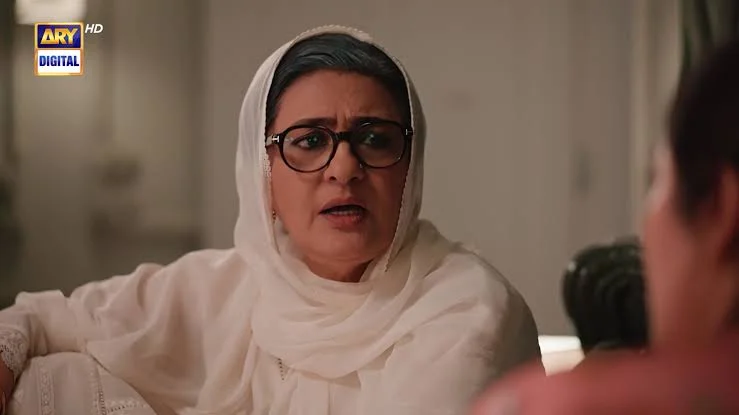
This is just one instance. She has been doing this in her books for years. Unlike other writers, for example Nemrah Ahmed, known for Jannat Ke Pattay, who will outright give the reader a list of qualities needed in order to become an “Achi Larki” (a phrase she has overused throughout the book), Ahmed has a very specific way of using spirituality in her books. By the time a reader finishes a Nemrah Ahmed book, she would likely feel ashamed at how she has been conducting her life as a Muslim woman, which is very much the desired impact. Umera Ahmed, on the other hand, has a much subtler way of weaving spirituality into her stories.
First, she connects the lack of religious values with being wealthy, which automatically establishes the idea that the richer you are, the farther you are from God. Then she uses obsession as a tool to connect with her audience; in two of her dramas now, she has depicted women in love more accurately than most Pakistani writers.
In Sheher-e-Zaat, Falak was completely, senselessly in love with Salman, a man who looked like a sculpture she had made. She was a remarkably desired woman, loved by many, spoiled by her family, and had everything in life, but she would do anything just to be seen by Salman. Towards the end, she finds herself wailing and losing herself as he chooses someone else who was nothing like her. That is when she discovers that nothing lasts except for the love you have for the One, which is God.
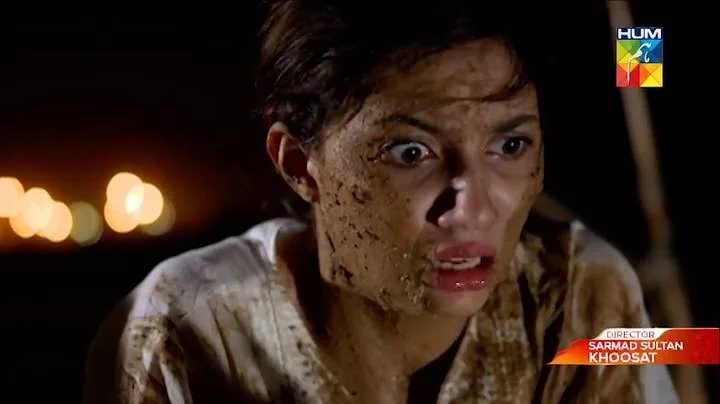
A very famous phrase from the drama, which is still quoted and resonates with many, is: “Allah ki mohabbat ke siwa har mohabbat ko zawaal hai” (every love is destined to fade except the love for Allah).
In the same way, Zaryab’s character arc is leading towards it. She is obsessed with Zamil, her life revolves around him, and her decisions are shaped by keeping him in the picture. Towards the end, she will realise how flawed her pursuit of love was, and that ultimately, all love belongs to the One who created her.
There’s another scene in Darr-e-Nijaat where Zamil leaves for a tableeghi trip with his friend Arham without telling anyone. In the meantime, his family and Zaryab are frantically looking for him. Later, when he comes back, Zaryab goes to meet Arham out of curiosity, so she can find out where Zamil actually was. Arham confirms it and delivers a dialogue that says, “Tumhay pata hai is baray sheher se baahir jo log hain unhen durood bhi sahi se parhna nahi ata.”
This line reeks of sheer ignorance because, on the outskirts of this big city, there are people who are also deprived of basic necessities of life. Even within the city, people struggle every day to put one meal on the table. And out of all the issues one could write about, she chooses to talk about how religion is something these people, who are barely managing to survive, lack.
A truly strange thing about such dramas and stories is that the audience they seem to be speaking to is not necessarily the audience watching them. Characters like Zaryab and Falak, in real life, are unlikely to sit down and watch these dramas; these dramas will not be helping them have a change of heart about their lifestyle or priorities.
Urdu digests enjoy a substantial readership. Academic estimates put hard-copy readership at roughly 300,000 adults across Pakistan each month, with additional online readers abroad. Individual titles such as Khawateen Digest and Shuaa have historically circulated between 130,000 and 150,000 copies, among the highest in the genre. And this readership is not overwhelmingly rural or working class. Research has found that Urdu digests are read largely by middle-class young women living in urban areas in Pakistan and overseas.
Television dramas, however, reach a much broader audience. Gallup Pakistan and the U.S. Agency for Global Media found in a 2014 survey that more than three-quarters of Pakistani adults watched television weekly, with viewership at 89.3% in urban areas and 69.3% in rural areas. But because Pakistan’s population is majority rural, the rural audience is larger in absolute numbers. In other words, while television reaches urban audiences at a higher rate, the overall audience is not an exclusively urban one. It is national.
And this is where my problem with these stories begins.
Darr-e-Nijaat and Sheher-e-Zaat centre women who have money, privilege, beauty and access to almost everything they could want, yet are portrayed as spiritually empty because they are chasing the love of a man. The message seems to be directed at women like Zaryab and Falak: your worldly privilege will not fulfil you; your obsession with romantic love is misplaced; the only love that ultimately matters is your relationship with God.
But Zaryab and Falak are fictional representations of a very specific class of women. The women actually consuming these stories are not necessarily living their glorified lives. They are only watching them. In fact, a large part of the television audience is made up of middle-class and rural households, many of whom are already living within deeply entrenched patriarchal and misogynistic social structures. In that context, the spiritual lesson does not necessarily land where the writer intends it to. Instead, it can reinforce the very ideas that women have been taught all their lives: that a woman's choices must be governed by shame, that her worth is tied to modesty, that her sexuality is a source of family honour, and that suffering or restraint can be dressed up as religious virtue.
This is what concerns me most about Ahmed's particular way of writing spirituality. She rarely presents these ideas as blunt moral instructions. Instead, she embeds them in the emotional journeys of women we are encouraged to empathise with. So when Zaryab is coerced into sleeping with Zamil and the immediate moral lesson is about her modesty, the problem is no longer simply limited to what happens to a fictional character. It is what the millions of women watching her are being taught to understand about what happened to her.
[T]he spiritual lesson does not necessarily land as intended. Instead, it can reinforce the very ideas that women have been taught all their lives: that a woman's choices must be governed by shame, that her worth is tied to modesty, that her sexuality is a source of family honour, and that suffering or restraint can be dressed up as religious virtue.
The person who needs to be held accountable is not the one who has been coerced. But when shame becomes the language through which we explain her experience, that distinction starts to disappear. And perhaps the most dangerous thing is not that a woman like Zaryab is being told to look beyond her worldly privileges. She probably should. The problem is that the lesson does not stay with Zaryab. It travels far beyond her.
In a society where women are already taught to measure their worth through modesty, obedience and their ability to endure, stories like these can strengthen the very structures they appear to be questioning. When a woman is sexually coerced and the conversation immediately turns to her modesty, when desire for romantic love is repeatedly framed as a moral failing, when wealth is associated with spiritual emptiness, these ideas do not exist in isolation. They become another layer of justification for the shame women are already made to carry.
And the women most vulnerable to that message are not necessarily the wealthy, beautiful, privileged women these stories place at the centre. They are the women who have fewer choices: the woman who cannot leave an abusive marriage; the girl whose sexuality is policed by her family; the woman who has been taught that her body is a vessel of family honour; the girl who has never been given enough freedom to distinguish between faith and fear.
This is where I think the responsibility of a writer becomes particularly important. There is a difference between writing about spirituality and using spirituality to moralise women's suffering. There is a difference between telling a woman that romantic love cannot be the only thing that gives her life meaning and telling her – directly or indirectly – that her desires are what put her in danger in the first place.
Umera Ahmed taught an entire generation of women to see themselves in literature. That is precisely why I think we should be critical of what she teaches them to see when they look back at themselves. Because misogyny does not always arrive loudly. Sometimes it arrives wrapped up as a beautifully written story, a complicated woman, a heartbreak, a religious awakening and a lesson about modesty. And sometimes, because we have loved the writer for so long, we forget to question the lesson.
Aleezeh Fatima Hashmi is a Karachi-based journalist. She reports on climate, health, migration and human rights.