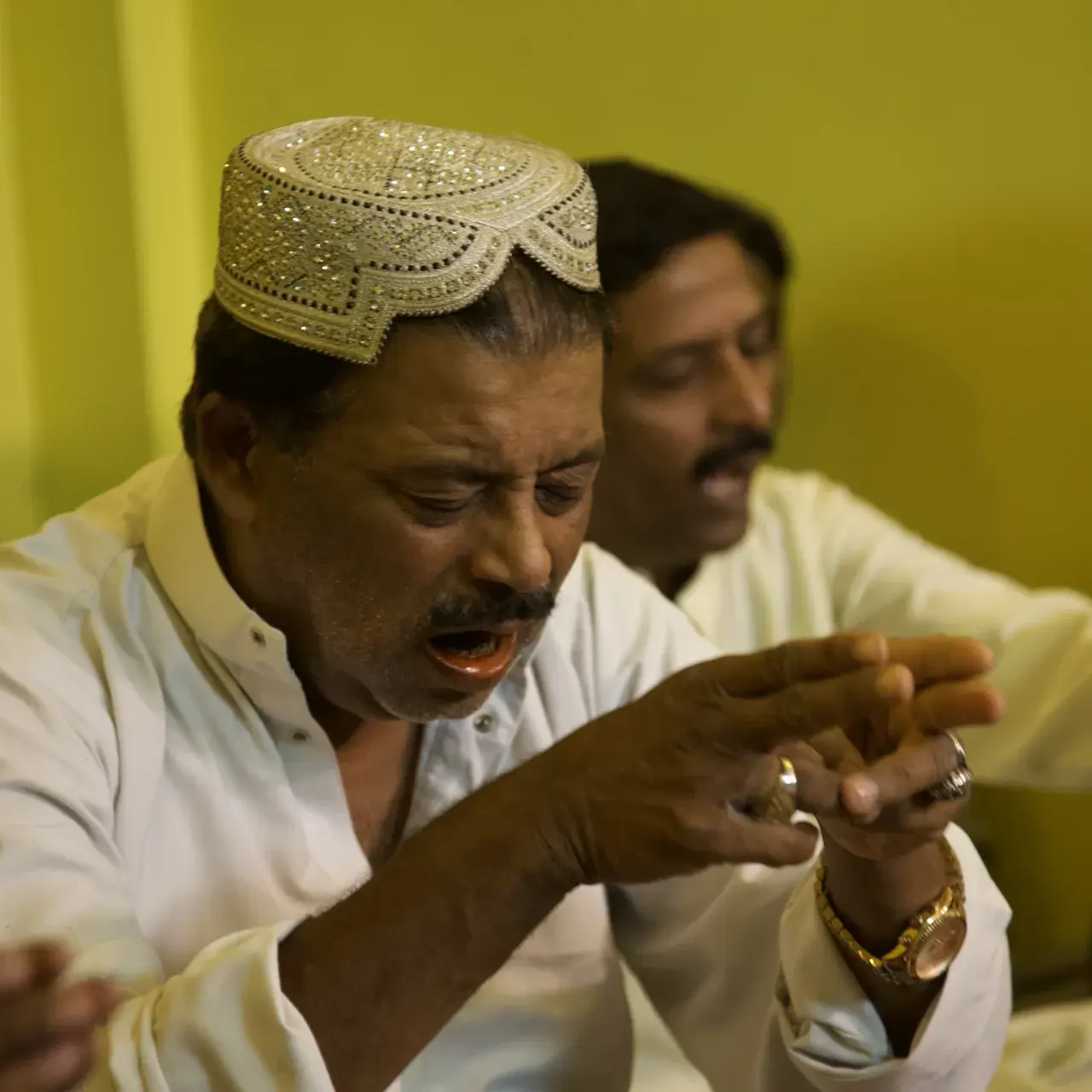
Woh jo aap ne Dream Journey ke liye gaaya tha, woh zara suna dijiye” has become a common request Pakistani qawwals receive from their most avid listeners. The Dream Journey started as a group of friends who gathered annually to record trained singers and instrumentalists across classical and folk traditions, in intimate, domestic settings. In over a decade of traveling across Pakistan now, they have built a vital archive of the nation’s musical heritage on YouTube, a one-of-its-kind free public resource.
The seeds of this self-funded project were planted when three bloggers from Austria, Canada, and Pakistan connected online via their blogs over their shared love of qawwali: a UN worker (QAUL), a travel consultant (Sufi Music), and a doctor (Tangled Up In Blue). The group eventually attracted a wider community of enthusiasts through their blogs and a shared classical music Facebook group. The informal collective expanded over the years, and stands at ten members currently, who all contribute through their various roles as well as towards the costs of the project.
After Arif Ali Khan, who would go on to become one of the founding members of the group, posted a well-received video of a raw, private baithak to his YouTube channel Tasawwuf, he suggested visiting qawwals in their homes during his 2014 Pakistan trip, purely to share the intimate live experience. “The intention was not really so much to record and to document initially,” he says. “The intention was the experience of listening and the enjoyment of listening together.” But the idea to record and release the sessions took shape quickly, especially after filmmaker Mahera Omar joined and contributed key visual elements, such as the signature blue sky that opens each video.
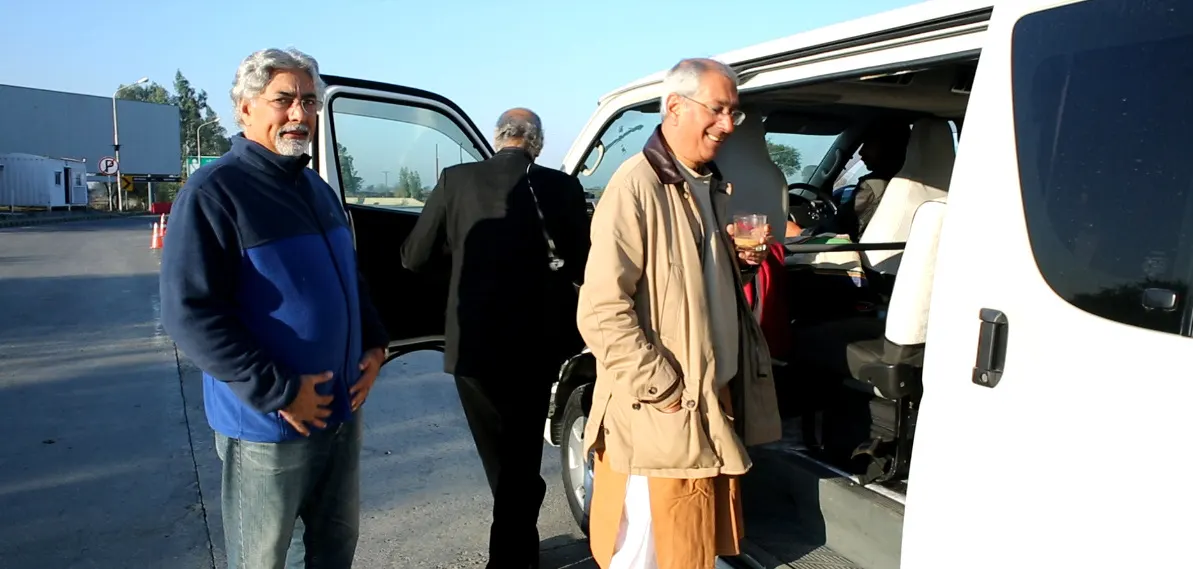
Most of the group had never met in person, but when they first gathered together in Karachi in 2014, their shared passion for qawwali connected them instantly, bridging generational and professional divides. Despite tight schedules and the risk of delays across Pakistan, the journey unfolded almost seamlessly, as if divinely blessed.
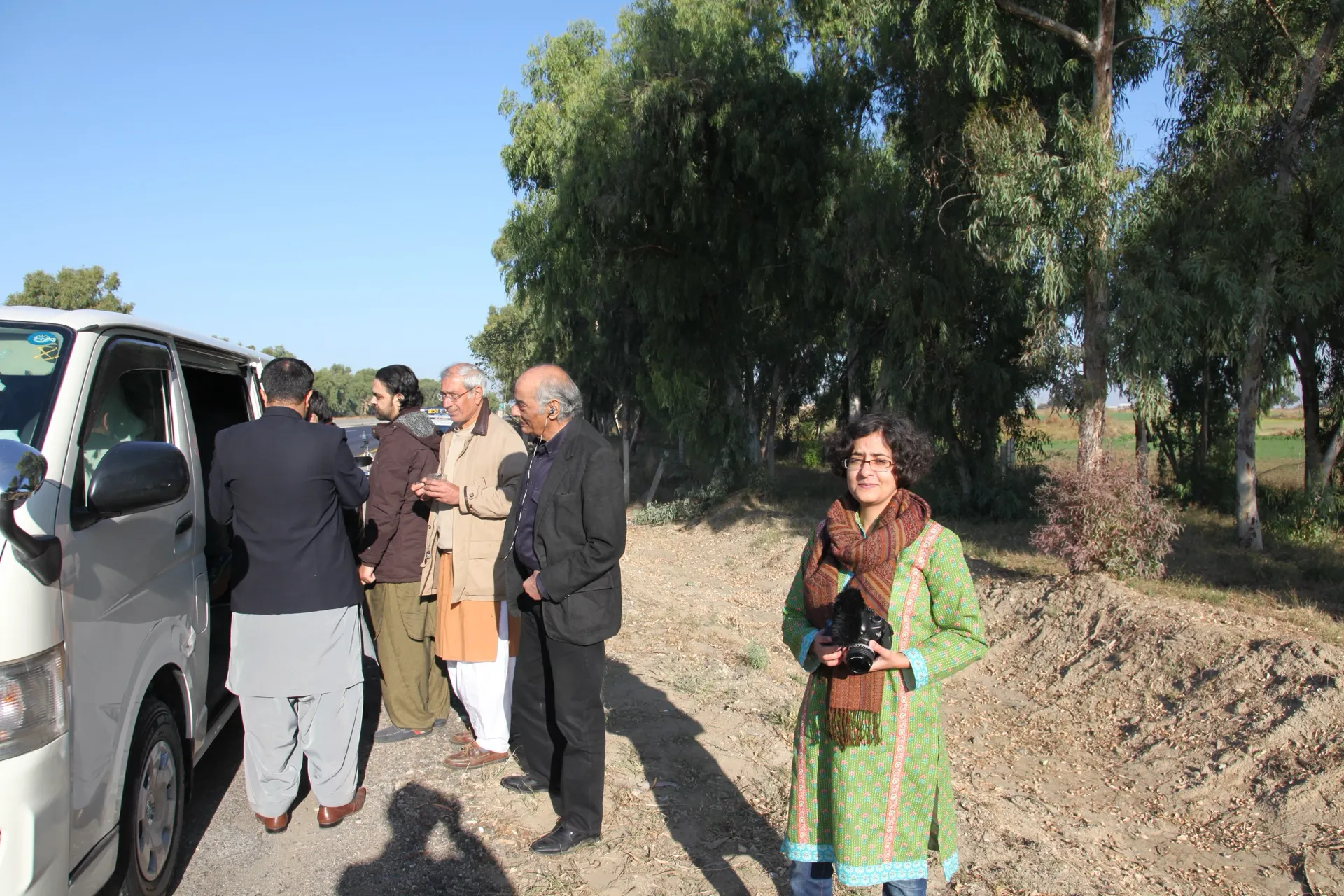
The cross-country road trip came together quickly, with everyone taking on their own role alongside their day jobs: hunting down artist information through YouTube comments, arranging buses, curating sessions, contacting musicians, and sourcing recording equipment. Most of the group had never met in person, but when they first gathered together in Karachi in 2014, their shared passion for qawwali connected them instantly, bridging generational and professional divides. Despite tight schedules and the risk of delays across Pakistan, the journey unfolded almost seamlessly, as if divinely blessed.
To keep performances raw and unfiltered, The Dream Journey tries to make recordings as domestic as possible, often in the musicians’ own homes, encouraging full-length heritage pieces over the short commercial numbers usually played simply because “public ye maangti hai”. Ustad Fareed Ayaz and Ustad Abu Muhammad once joked to engineer Vaqar Ahmed that wedding gigs are just “qeema kootna” (grinding out songs), whereas these sessions allowed rare depth. Germany-based architect Mushtaq Ahmed recalled Ustad Fareed singing compositions that had lain dormant for fifty years – revived by a deeply knowledgeable audience. Sessions like these have helped unearth forgotten family repertoire, including Kaan Roz ke Rooh-e-Aadam Amad Babadan, which later reached a wider audience on Coke Studio Pakistan.
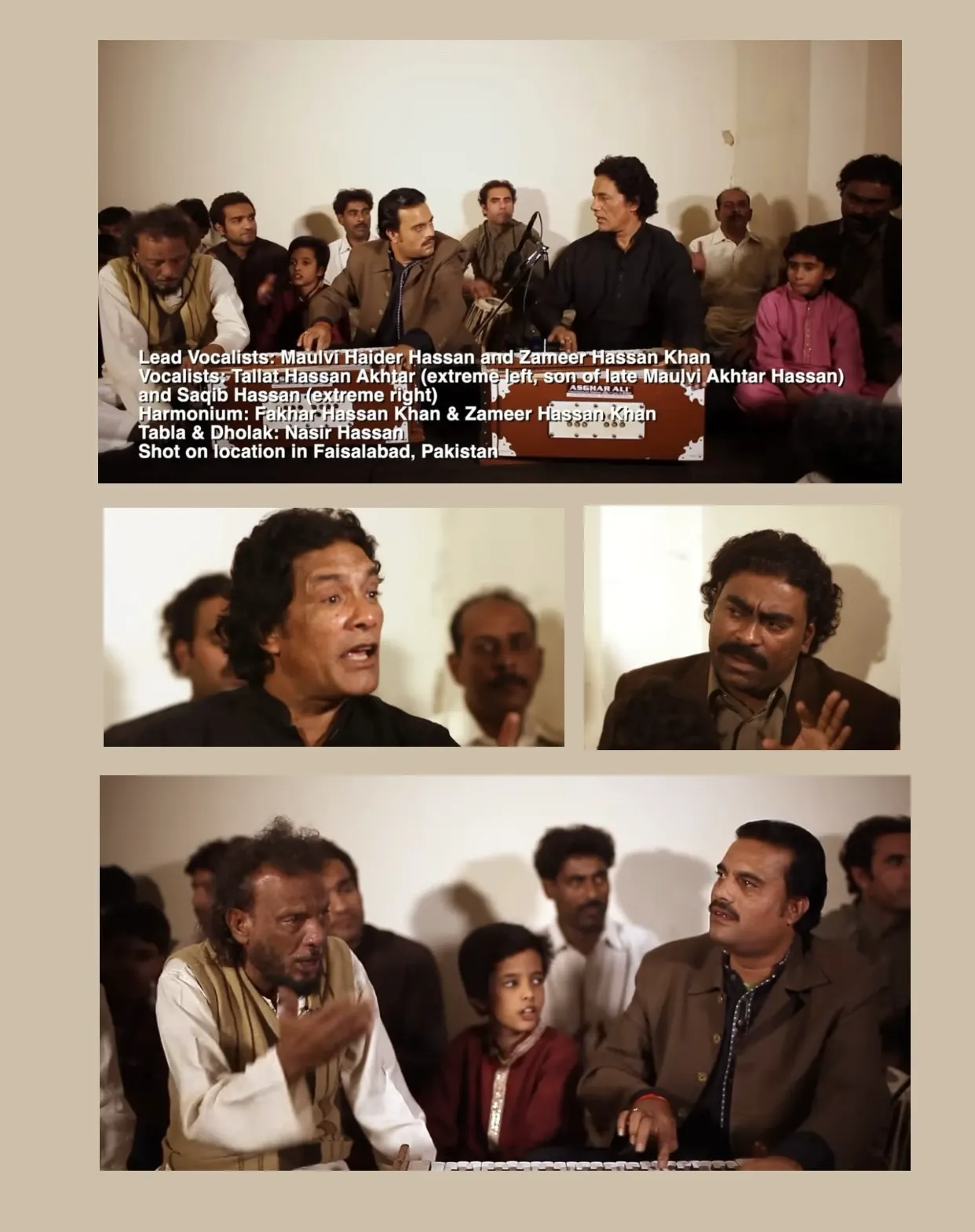
However, The Dream Journey quickly realized that talented artists can transform even the most common kalaams: “Even if some piece is a chestnut or has been done to death, if the artist has innate talent, they can do wonders with it.” Consequently, the team encouraged artists to perform whatever pieces they felt most passionate about alongside heritage pieces.
A pivotal anecdote involves the late Ustad Ameer Ali Khan from Dipalpur, the iconic face of the group’s YouTube channel. Though then obscure to city dwellers, several members were devoted fans determined to record him on their first trip. Finding him proved challenging. They arrived in Dipalpur without an address or contact information, but they eventually fortuitously met a motorcycle shopkeeper who called Ustad Ameer over. When Ustad Ameer insisted on performing Chaap Tilak, the group resisted initially, preferring rarer pieces. Once they gave in though, his unique delivery and Punjabi ‘girahbandi’ (interwoven poetic couplets) completely blew them away.
Moreover, the hospitable setting naturally leads to candid conversations which are often captured in the recordings themselves. When asked about touring abroad, Ustad Ameer replied, “Jahaaz te jaan ton darr lagda hai, London chaddo ji, main toh Karachi nahi jaana, darr lag raha hai mainu.” (“I am scared of planes. Never mind London, I’m not even going to Karachi.”) As of now, Ustad Ameer’s videos alone have millions of views on YouTube, showing that The Dream Journey serves as a bridge for these deeply devoted yet humble artists, introducing them to wider audiences and helping them find new work.
Unpredictable site issues are routine, including exploding lightbulbs, electricity outages, gender segregation, and on occasion, the dreaded realization that a microphone was switched off for an entire performance.
The Dream Journey intentionally pairs high-quality audio and video with introductions to each artist’s lineage, a response to the team’s own early difficulty finding clear, reliable recordings of earlier classical and folk musicians. Listeners can go deeper by joining their regular Zoom Qawwali sessions – open to anyone – where songs are heard together and their histories shared. And for poetry that might otherwise be inaccessible to audiences, the YouTube videos offer contextual translations from Farsi, Urdu, Hindi, Braj Bhasha, and Punjabi, a labour of love made possible by a translator who learned Farsi just to transcribe traditional qawwalis.
Arif Ali Khan, now the main sound engineer, is self-taught too. He’s affectionately known as “mir-e-karawan” (“the leader of the caravan”) for everything he juggles: coordinating the group, managing song distribution every Friday, and wading through the demos musicians send in. On the visual side, Mahera Omar originally shaped the project’s filming and production before passing the role to technical producer Adnan Hussain, who now oversees everything from filming to post-production and archive releases. As a visual storyteller, Adnan punctuates the footage with the reactions of knowledgeable members like Asif Hasnain and Vishal Kella, whose genuine passion, he explains, helps casual viewers realize they are witnessing something special. This approach clearly resonates with viewers worldwide; Asif has even been stopped on European streets by strangers who recognize him as “the guy from the Dream Journey videos.” Everyone found their role along the way, and that shared effort holds the project together.
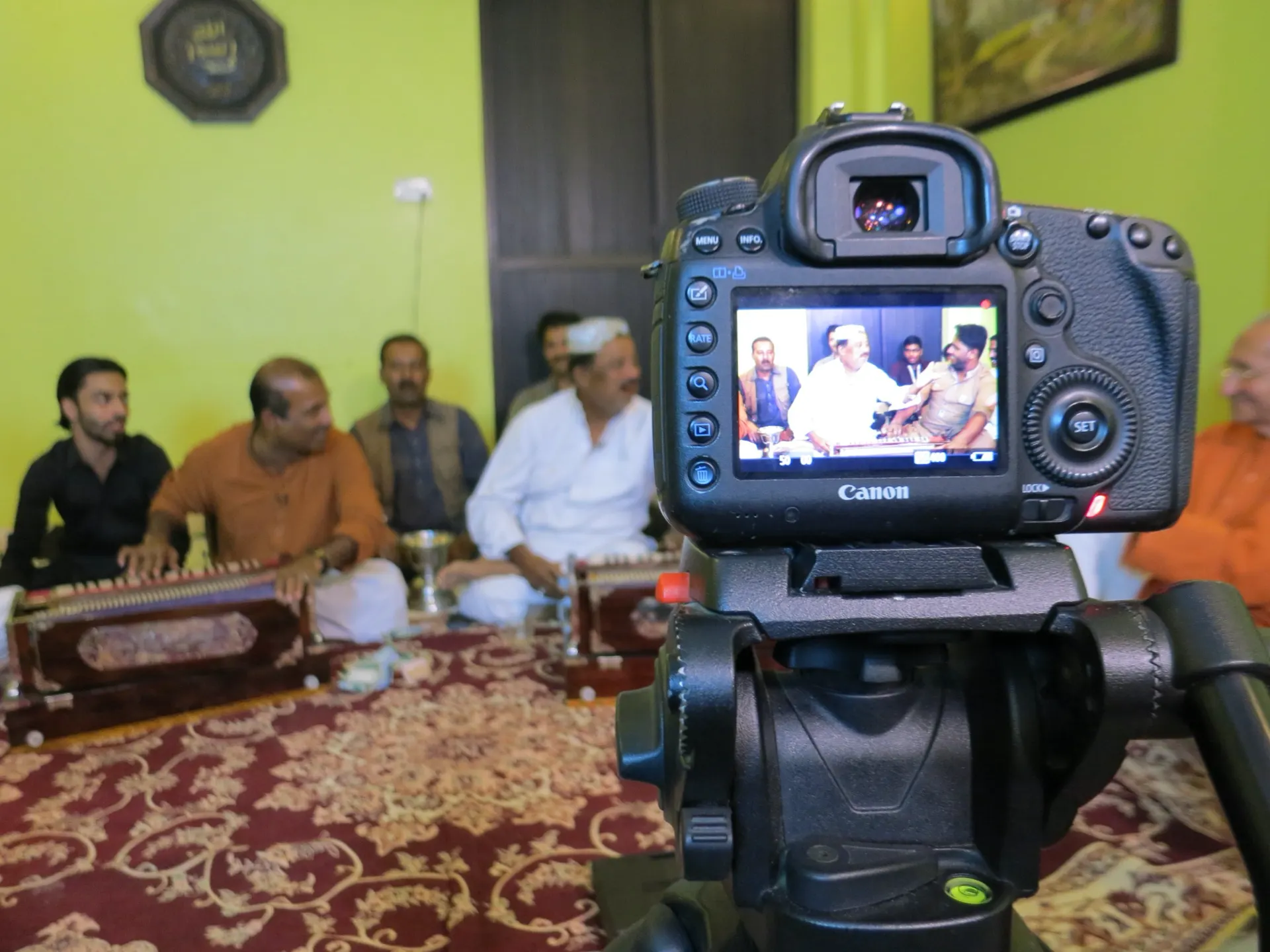
Their dedication to field recordings comes with significant challenges. Unpredictable site issues are routine, including exploding lightbulbs, electricity outages, gender segregation, and on occasion, the dreaded realization that a microphone was switched off for an entire performance. Tight spaces force everyone to sit toe-to-toe, where the raw volume of the performers can feel overwhelming. Carrying heavy gear across the country and sitting on the floor for long hours is tough, particularly for the older team members. A recording trip of this scale requires constant improvisation and concessions. Yet the team endures because of the deep bond they share. As engineer and resident motivator, Mian Shaukat Hussain, explains: “Listening to music depends on who you're listening with. If you're with the right people, synergy is created and 1 + 1 becomes 11. But with the wrong people, 1 - 1 is 0.”
This deep connection culminated in a Dream Journey member’s wedding event, where Ustad Ameer Ali Khan performed. As some members reflected, that session captured the true essence of the project: their love for one another and their shared passion for music.
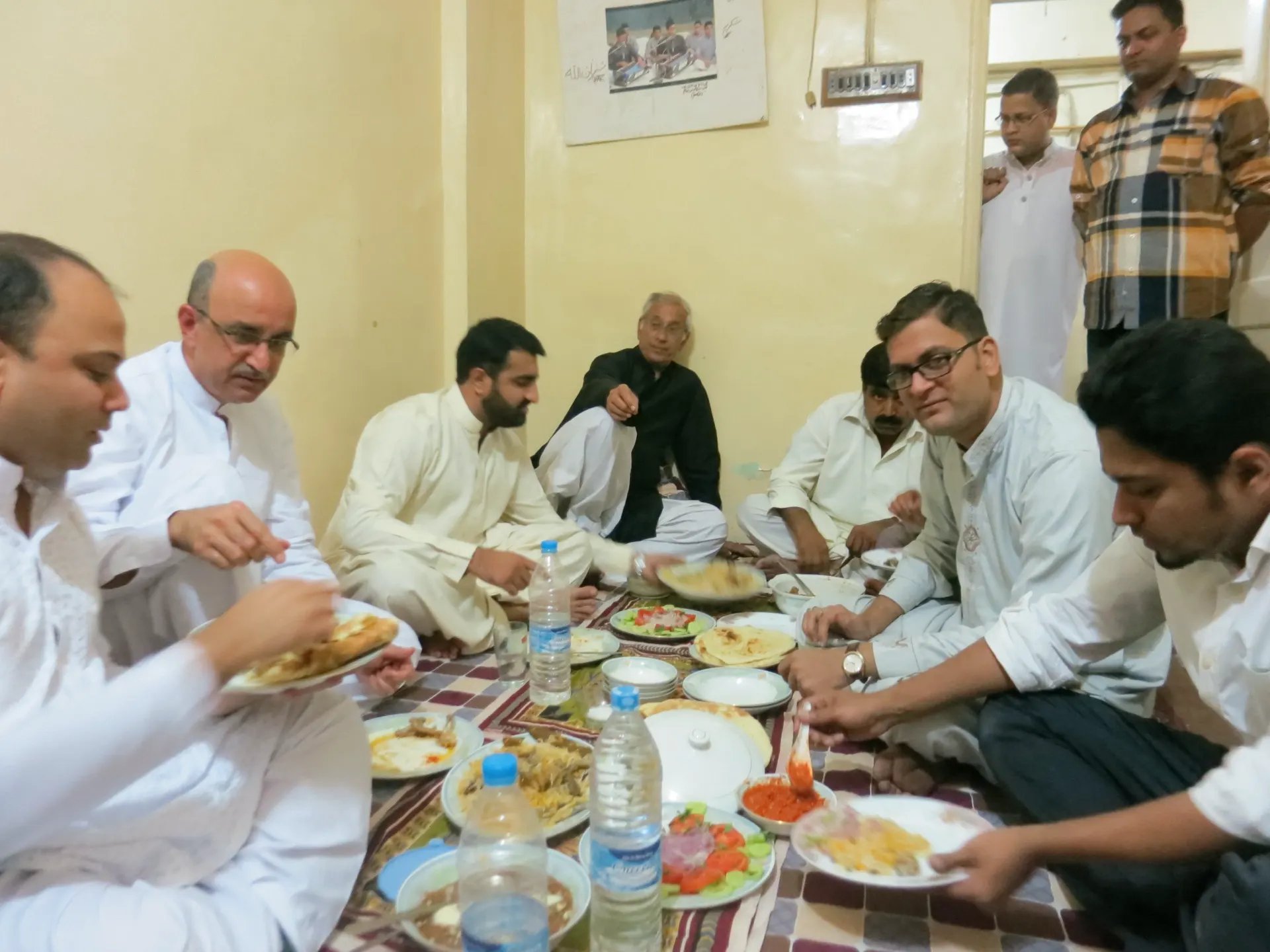
Another consequence of these tightly packed, two-week annual trips is that members often have to apologize to each other’s families for stealing them away. Their bond is captured in their WhatsApp group name, coined when Chicago-based Dr. Saad Alvi was teased by his niece after a late recording session for finally making time for family after being with his “asli rishtedar.” Over time, the team has grown into an extended family, even bringing their own relatives along for these trips. Their travel time together is also defined by rich food traditions, ranging from homemade Punjabi dishes by a member’s grandmother in Sargodha to intimate meals hosted by qawwals, and the customary farewell dinner at the Karachi Boat Club. As members fondly joke, every recording trip is also a food tour. This deep connection culminated in a Dream Journey member’s wedding event, where Ustad Ameer Ali Khan performed. As some members reflected, that session captured the true essence of the project: their love for one another and their shared passion for music.
Ustad Fareed Ayaz and Ustad Abu Muhammad once joked… that wedding gigs are just “qeema kootna” (grinding out songs), whereas these [Dream Journey] sessions allowed rare depth. Germany-based architect Mushtaq Ahmed recalled Ustad Fareed singing compositions that had lain dormant for fifty years – revived by a deeply knowledgeable audience.
Reflecting on the past decade, the members of The Dream Journey realize that what began as simple field recordings has transformed into an essential digital archive. Many of the master musicians captured in those early sessions have since passed away, turning spontaneous domestic performances into invaluable pieces of musical history for their families, students, and future generations. The journey was never about chasing famous names; it was about seeking out regional masters through pure persistence. In one case, the team had to rely on local police in Umerkot to locate the elusive Sindhi singer Shafi Faqir.
This passage of time is visible not just in the loss of older masters, but in the growth of new ones. Team members recall sessions from 2014, where young boys sat quietly beside legends. Today, those same boys have grown into young men leading the ensemble, picking up the baton and carrying the tradition forward. Ultimately, The Dream Journey captures art forms with a long lineage that continue to evolve. And as Saad Alvi observed, it has also become a repository of “a true Pakistaniyat”: “Practicing strictly within Pakistan has created a distinct flavor… that sets this form of qawwali apart from both its historical roots and what is practiced in other parts of the subcontinent.”
Laila Dodhy is a product designer and published UX (User Experience) researcher who moonlights as a music journalist. In her free time, she builds technology such as Gaana Mangwao, to make South Asian music and languages more accessible.